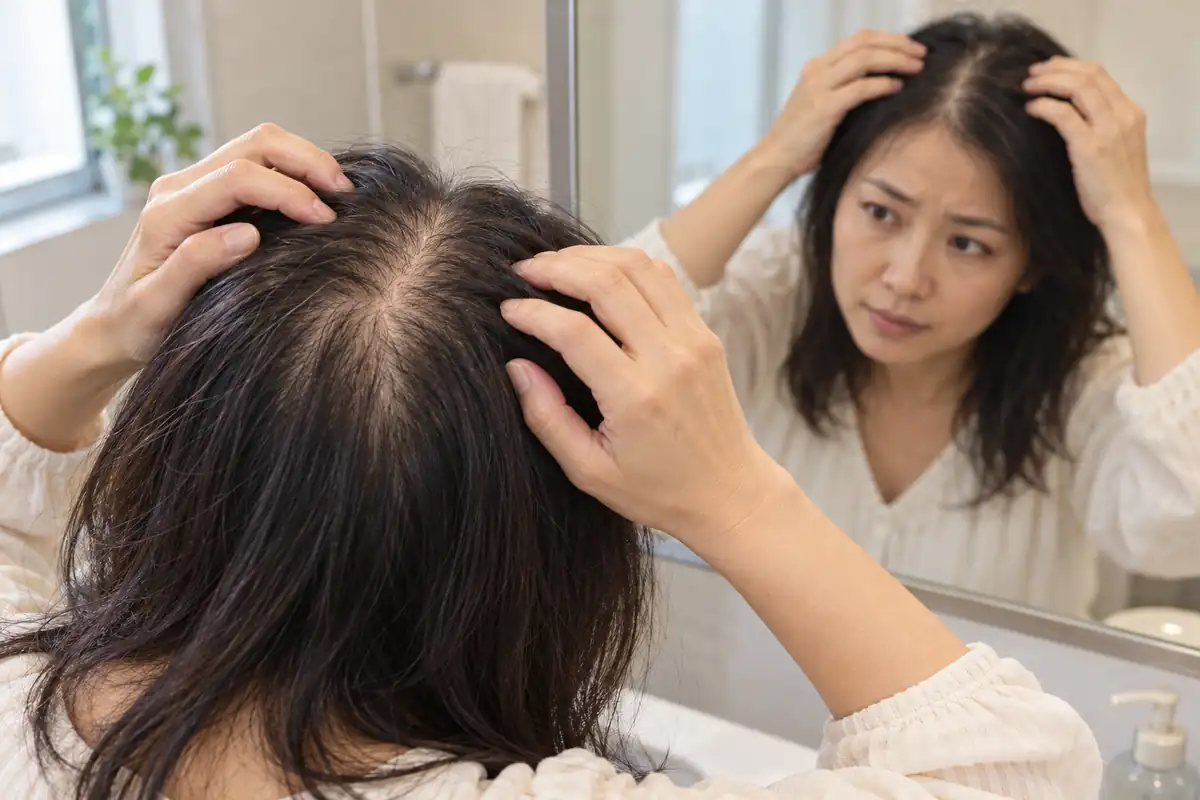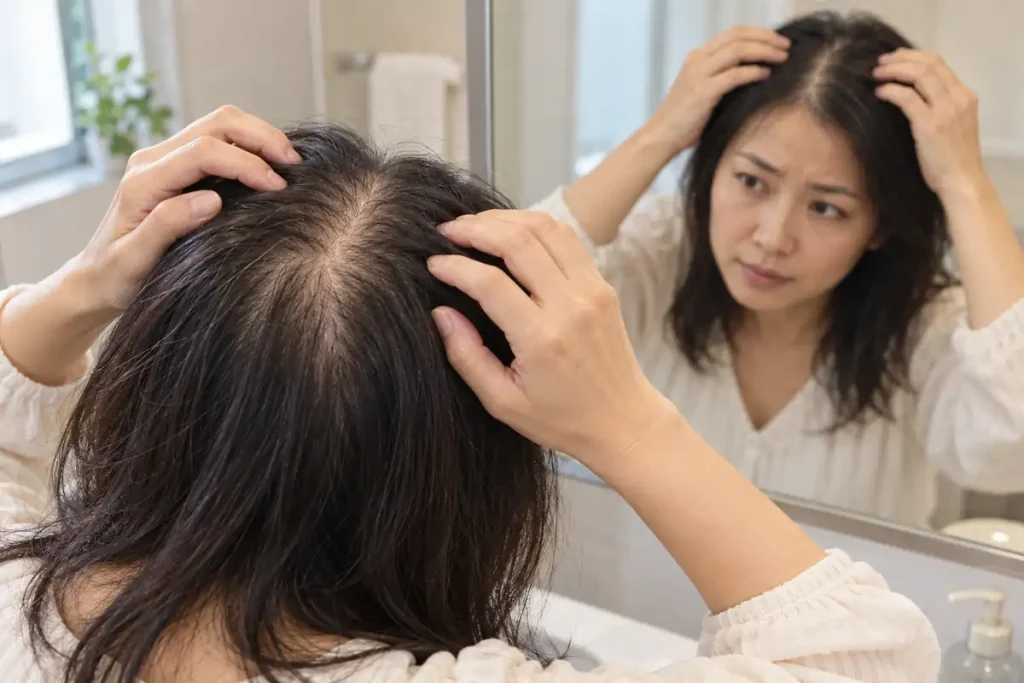
Why hair thins, which hair loss treatments have real evidence behind them, and how we combine laser, exosomes, PRF and medication into one plan
It starts quietly. More hair in the shower drain. A parting that looks wider in photos. The crown showing under the office lights, or a hairline that seems further back than it was last year. You try a new shampoo, then a serum, then another one, and nothing really changes. If that sounds familiar, you are not imagining it, and you are far from alone.
In short: Most hair loss in adults is pattern hair loss or stress-related shedding, and both can be treated, especially when caught early. At Verve Clinic, a doctor first works out why your hair is thinning, then combines treatments that work in different ways: Fotona HAIRestart laser and exosomes to stimulate the scalp, PRF made from your own blood, and prescribed medication with supplements where suitable. Most patients have at least 5 monthly sessions, and many notice less shedding and visibly thicker hair after about 3.
Below, we explain what is behind your hair loss, what each treatment does, what the research honestly shows, and what results our patients have seen.
Why is my hair falling out?
Pattern hair loss is the most common type: about half of men show signs of it by age 50 (rates are somewhat lower in Asian populations), and in women it becomes more common after menopause, according to StatPearls.
Hair loss is a symptom, not a diagnosis. The right treatment depends on the cause, which is why we never start with a one-size package. These are the causes we see most often:
| Type of hair loss | What you notice | Common cause | What usually helps |
|---|---|---|---|
| Male pattern hair loss | Receding temples, thinning crown | Genes and hormones (DHT) shrink the follicles over time | Medication, laser, exosomes, PRF |
| Female pattern hair loss | Wider parting, thinner ponytail, front hairline kept | Genes and hormones, often after menopause or with PCOS | Medication, laser, exosomes, PRF |
| Stress-related shedding | Sudden handfuls of hair, all over the scalp | Illness, childbirth, surgery, crash dieting or major stress, usually 2 to 3 months earlier | Treating the trigger; scalp treatments speed recovery |
| Nutritional or hormonal | Diffuse thinning, dry or brittle hair | Low iron, thyroid problems, vitamin D deficiency | Correcting the cause, plus supplements |
| Patchy hair loss | Round, smooth bald patches | Alopecia areata, an autoimmune condition | Needs medical assessment and different treatment |
Shedding some hair every day is normal. Pattern hair loss is different: the follicles slowly shrink, and each new hair grows back finer and shorter until some stop growing at all. That is why early treatment matters. A thinning follicle can often be strengthened; a follicle that has stopped working for years is much harder to bring back.
How do I know it is more than normal shedding?
See a doctor if you notice any of these:
- Your parting or crown looks noticeably wider than a year ago
- Your ponytail feels thinner, or your hairline has moved back
- You are shedding in clumps for more than a few months
- You have bald patches, or an itchy, red or scaly scalp
- Hair loss runs in your family and you want to act before it progresses
What hair loss treatments do we offer at Verve Clinic?
We use four tools, and most patients benefit from more than one.
Fotona HAIRestart laser. A gentle Er:YAG laser warms the scalp without needles. It improves blood flow around the follicles and stimulates them to move into their growth phase. Sessions take 20 to 30 minutes, and there is no downtime.
Hair exosome therapy. Exosomes are tiny messengers that carry growth factors and signalling molecules between cells. We apply them with microneedling, so they reach the follicles where they are needed. Sessions take 30 to 40 minutes.
PRF (platelet-rich fibrin). We take a small sample of your blood, spin it to concentrate the platelets and growth factors, and inject it into the thinning areas. Because it comes from your own body, there is nothing foreign added.
Medication and supplements. For pattern hair loss, prescribed medication slows the hormonal process that shrinks follicles, while supplements correct any gaps in what your hair needs to grow. Your doctor chooses these after assessing you, and reviews them at each visit.
HAIRestart vs exosomes vs PRF: which is right for you?
| Fotona HAIRestart laser | Exosomes with microneedling | PRF | |
|---|---|---|---|
| How it works | Laser energy boosts scalp circulation and follicle activity | Growth signals delivered to the follicles | Your own concentrated platelets and growth factors |
| Needles | None | Fine microneedling | Small injections, with numbing |
| Session time | 20 to 30 minutes | 30 to 40 minutes | 30 to 45 minutes |
| Downtime | None | Mild redness for a day | Mild tenderness for a day or two |
| Best for | Early thinning, needle-shy patients, maintenance | Thinning crown or parting, boosting other treatments | Moderate thinning, patients who prefer a treatment from their own body |
Why we combine treatments
Hair loss has several drivers at once: hormones shrinking the follicle, poor circulation, inflammation, and gaps in nutrition. A single treatment usually addresses only one of them. Combining them is how we get results that a shampoo or a single session cannot.
In practice, most of our patients have Fotona HAIRestart and exosomes in the same visit: the laser prepares and stimulates the scalp, and the exosomes are then delivered with microneedling. We usually recommend at least 5 sessions, one month apart, alongside medication and supplements where suitable. PRF can be added for patients who need extra support.
Does hair loss treatment actually work? What the research says
We want you to choose treatment with clear eyes, so here is the evidence in brief:
- Medication has the strongest evidence for pattern hair loss and is the foundation of most plans. According to StatPearls, two medicines are approved by the US FDA for pattern hair loss, and using treatments in combination often gives better results.
- PRP and PRF have been tested in many trials. A review of these studies in American Family Physician found that platelet-rich plasma increased hair density by about 28 to 30 hairs per square centimetre on average, with little risk of serious side effects. PRF is a newer preparation of the same idea, made without an anticoagulant so it releases growth factors more slowly. It has fewer trials than PRP so far.
- Exosomes are newer. In one 24-week study of exosomes applied with microneedling, hair density rose and over half of patients reported thicker hair and less daily shedding, according to a 2025 review reported by Dermatology Times. Larger trials are still needed.
- Erbium lasers such as HAIRestart have shown encouraging results in early studies, but those studies are small.
This is exactly why we combine treatments: each one adds a different push towards regrowth, and medication keeps the underlying process in check.
What is the treatment like?
Your first visit is a consultation and scalp assessment, where we look at the pattern of your hair loss, your health and your history. If we suspect a cause such as low iron or a thyroid problem, we may suggest a blood test through our health screening. Treatment then follows a simple rhythm.
| Quick facts | |
|---|---|
| Session time | 45 to 75 minutes for a combined session |
| Comfort | Laser feels warm; numbing cream is used for microneedling and PRF |
| Downtime | None to minimal; you can usually go back to work the same day |
| Course | At least 5 sessions, one month apart |
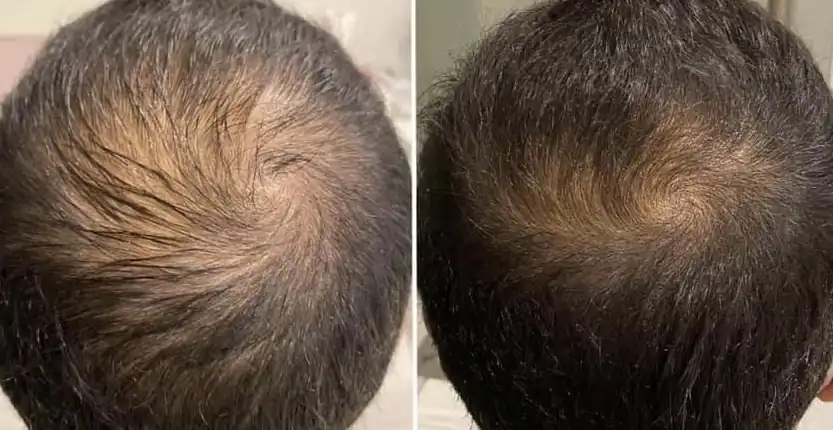
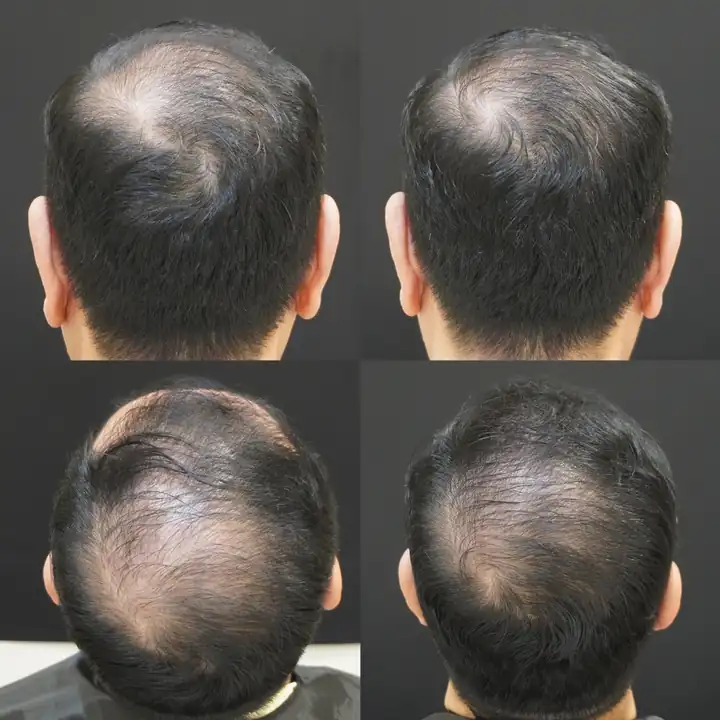
| When you see a change | Less shedding first, then thicker hair, often visible by the 3rd session |
| Maintenance | A top-up session every 3 to 6 months |
What to expect month by month:
- Months 1 to 2: shedding slows down and the scalp feels healthier.
- Months 2 to 3: fine new hairs appear along the parting, crown or hairline.
- Months 3 to 6: hairs thicken and darken, and the scalp shows through less.
- After the course: maintenance sessions and medication help you keep what you have gained.
Every scalp responds at its own pace, and some patients take longer to see change. That is why we photograph your scalp at each visit and adjust your plan as we go.
Is hair loss treatment right for you?
You may be a good candidate if you:
- have early to moderate thinning, rather than long-standing complete baldness
- are a man with a receding hairline or thinning crown
- are a woman with a widening parting or thinner ponytail
- have had heavy shedding after stress, illness or childbirth
- want a non-surgical option, or want to protect your results after a hair transplant
Treatments may not be suitable during pregnancy or breastfeeding, or with an active scalp infection, and patchy hair loss needs a different approach. We will go through this with you at your consultation.
A note from Dr. Adriene Chee: “The patients who do best are the ones who start early and stay consistent. Hair grows slowly, so we plan for months, not weeks, and we combine treatments so each one supports the others.”
Frequently asked questions
What is the best treatment for hair loss in Malaysia?
There is no single best treatment for everyone. For pattern hair loss, the most effective approach is usually a combination of prescribed medication with scalp treatments such as laser, exosomes or PRF, chosen after a doctor has assessed the cause.
How many sessions will I need?
We usually recommend at least 5 sessions, one month apart. Many patients notice less shedding and thicker hair by the 3rd session, followed by maintenance every 3 to 6 months.
Does hair loss treatment hurt?
The laser feels warm and needs no numbing. For microneedling and PRF, we apply numbing cream first, so most patients feel only mild pressure or prickling.
Is there any downtime?
Very little. You may have mild redness or tenderness for a day, and most patients return to work the same day.
Are there any side effects?
Side effects are usually mild and short-lived: redness, tenderness or slight swelling of the scalp for a day or two after microneedling or PRF, and occasionally a small bruise where an injection was given. Prescribed medication can have its own side effects, which your doctor will explain before you start.
Will my hair fall out again if I stop?
Pattern hair loss is a long-term condition, so the underlying process continues if all treatment stops. Maintenance sessions and medication help you keep your results.
Is it suitable for women?
Yes. We treat female pattern hair loss, shedding after childbirth and hormonal hair loss, and adjust the medication and supplements for women.
How much does hair loss treatment cost?
It depends on the cause, the treatments you need and the number of sessions, so we give a personalised quote after your assessment. WhatsApp us for a quote.
Your hair can still change. Start with an honest assessment
The earlier you act, the more hair there is to save. At Verve Clinic in Petaling Jaya, a doctor will find out why your hair is thinning, recommend only what suits you, and track your progress with photos at every visit. WhatsApp us to arrange your scalp assessment.
About the author
Dr. Adriene Chee is the Medical Director of Verve Clinic in Petaling Jaya, with over 10 years of experience. Her qualifications include an MD from the National University of Malaysia (UKM), a Postgraduate Diploma in Dermatology (Bangkok) and an LCP in Aesthetic Medicine. Meet our team.
This article is general information, not medical advice. Results vary from person to person. Please discuss the benefits and risks of any treatment with a qualified doctor.