PDRN serums, salmon DNA creams and “microneedling in a bottle” are everywhere. What PDRN really is, why most skincare cannot deliver it, and where it actually works
Medically reviewed by Dr. Adriene Chee, Medical Director, Verve Clinic. Last updated: October 2026.
If you have scrolled through skincare videos lately, you have seen it: pink PDRN serums, salmon DNA creams, sheet masks promising “glass skin” and “clinic results at home”. PDRN has become one of the most talked-about skincare ingredients of the year.
So is it worth the hype? In this guide, Dr. Adriene Chee, a doctor with more than 10 years of experience, explains what PDRN is, what the science says about PDRN skincare, and where PDRN really makes a difference to your skin.
What is PDRN?
In short: PDRN (polydeoxyribonucleotide) is made of DNA fragments, usually from salmon, that help skin repair and renew. Injected PDRN and polynucleotides have real clinical evidence. In skincare, however, PDRN molecules are too large to pass through the skin, so most of the benefit of a PDRN serum comes from its other ingredients.
PDRN is not new. It was first developed in Italy as a medicine to support wound healing, and has been used for decades to help damaged tissue repair. It works by switching on a repair signal in skin cells (the adenosine A2A receptor), which encourages healing, new blood vessels and calmer, healthier skin.
Closely related are polynucleotides (PN). They are also DNA fragments, but with longer chains, so they form a supportive mesh in the skin as well as signalling repair. Rejuran and Plinest are both polynucleotide treatments.
Why is PDRN skincare suddenly everywhere?
PDRN became famous in Korea as an injectable skin booster, nicknamed the “salmon injection” (三文鱼针). Skincare brands then brought the name to serums, creams and masks, promising similar results at home. Popular lines from brands such as Medicube, Anua, VT Cosmetics and L’Oréal have made PDRN a fixture of social media.
The market is growing fast: one industry forecast cited by Dermatology Times expects PDRN skincare to reach over US$800 million worldwide by 2035. The question is whether the products can do what the injectable version does.
Does PDRN skincare actually work?
For hydration and comfort, it can help. For repair and collagen, it is unlikely. The main reason is size.
Healthy skin is an excellent barrier. As a general rule, only molecules smaller than about 500 Daltons can pass through intact skin. PDRN fragments are reported at 50,000 to 1,500,000 Daltons, roughly 100 to 3,000 times larger. Expecting them to soak into the deeper skin is like trying to push a football through a mosquito net.
A 2026 review in Dermatology Times concluded that PDRN applied to the skin, without a special delivery system, is unlikely to reach the skin cells that build collagen. Any visible glow is more likely to come from ingredients such as hyaluronic acid, glycerin, niacinamide or peptides in the same formula. Most brands also do not disclose the size of their PDRN fragments or show how they reach the skin.
| What the label suggests | What the science says |
|---|---|
| “Repairs skin like a clinic treatment” | Repair benefits are proven for injected PDRN, not for creams |
| “Boosts collagen” | Unlikely: the molecules are too large to reach collagen-making cells |
| “Microneedling in a bottle” | A misleading comparison, according to dermatology experts |
| “Hydrates and soothes” | Plausible, mostly thanks to other ingredients in the formula |
What about “vegan PDRN”?
Vegan PDRN is DNA taken from plants, such as ginseng or peony, or from bacteria, instead of salmon. Its fragments can be smaller, which may help absorption. However, most of the research is in the laboratory. According to Dermatology Times, the first published study in people, using a peony-derived PDRN, showed a modest improvement in under-eye elasticity after 4 weeks, but it was small and preliminary. Vegan PDRN is promising, but not yet proven.
So, is PDRN skincare just hype?
Mostly, yes, at least for the big promises. PDRN itself is not hype: it has decades of medical use and good evidence when it is placed into the skin. The hype is the idea that a serum can give you the same results. A PDRN serum can be a pleasant, hydrating part of your routine, but it is not a substitute for treatment.
If you enjoy your PDRN skincare, there is no need to stop. Just keep your expectations realistic, and if you want real change in skin quality, look at where PDRN actually works.
Does PDRN work when injected?
Yes. When PDRN or polynucleotides are injected into the skin, clinical studies show improvements in skin texture, fine lines and acne scars, because the product reaches the cells that repair the skin.
In clinic, polynucleotides are injected in tiny amounts into the deeper layer of the skin, exactly where they need to act. That is the difference between reading about PDRN and feeling its results.
| PDRN skincare | In-clinic polynucleotides (Rejuran, Plinest) | |
|---|---|---|
| How it is applied | On the skin surface | Injected into the deeper layer of the skin |
| Reaches the skin’s repair cells | Unlikely | Yes |
| Clinical evidence | Very limited | Clinical studies in people |
| What you can expect | Hydration and comfort | Better skin quality: texture, glow, firmness and fine lines |
| Done by | Yourself, at home | A doctor |
Rejuran (丽珠兰) vs Plinest: what is the difference?
We offer two polynucleotide treatments, both used as skin boosters to improve the quality of the skin from within.
| Rejuran (丽珠兰) | Plinest | |
|---|---|---|
| What it is | Polynucleotides from salmon DNA, made in Korea | Highly purified polynucleotides, made in Italy |
| Best for | Dull, tired or dehydrated skin, fine lines, texture and pores | Thin, dull, tired or sensitive skin, sun-damaged or sunburnt skin, fine lines and overall skin quality |
| Sessions | Usually 3, 4 weeks apart | Usually 3, 4 weeks apart |
| Maintenance | Every 6 to 12 months | Every 6 to 12 months |
| Comfort | Numbing cream; Rejuran HB contains a local anaesthetic | Numbing cream |
| Downtime | Small bumps for 1 to 2 days, or no downtime with the injector gun | Small bumps for 1 to 2 days, or no downtime with the injector gun |
We offer Rejuran Healer for the face, and Rejuran HB, which contains a local anaesthetic for extra comfort. If you are comparing Plinest with other boosters, our guide Profhilo, Plinest or skin boosters explains the differences.
What does the research say about polynucleotide injections?
In a 2022 randomised, double-blind, split-face trial in the Journal of Dermatological Treatment, 27 people had polynucleotide injections on one side of the face and a hyaluronic acid booster on the other. Both sides improved, and the polynucleotide side showed greater improvement in skin roughness and pore volume. No serious side effects were reported.
A 2024 review in the International Journal of Molecular Sciences found that polynucleotides improved fine lines around the eyes and acne scars in clinical studies, with mostly mild, temporary side effects such as redness, swelling or bruising. The authors note that most studies are small, so more research will help, but the evidence for injected polynucleotides is far stronger than for skincare.
What happens during a Rejuran or Plinest treatment?
Treatment takes about 45 to 60 minutes, including numbing. Your doctor assesses your skin, applies numbing cream, then places tiny amounts of the booster into the skin.
- Consultation and skin assessment. Your doctor looks at your skin and your goals, and recommends Rejuran or Plinest.
- Numbing cream. We apply numbing cream to keep you comfortable.
- Injection or injector gun. Tiny amounts of polynucleotides are placed evenly into the skin, either by hand or with an injector gun, a gentler machine technique with usually no downtime.
- Aftercare. After manual injection, small bumps at the injection points settle within 1 to 2 days; with the injector gun there is usually no downtime. Avoid make-up for the rest of the day.
| Quick facts | |
|---|---|
| Sessions | Usually 3, 4 weeks apart |
| Treatment time | About 45 to 60 minutes, including numbing |
| Comfort | Numbing cream; Rejuran HB contains a local anaesthetic |
| Downtime | Small bumps for 1 to 2 days, or no downtime with the injector gun |
| Results | Brighter, more hydrated skin within weeks, building with each session |
| Maintenance | Every 6 to 12 months |
Is there a gentler alternative to manual injections?
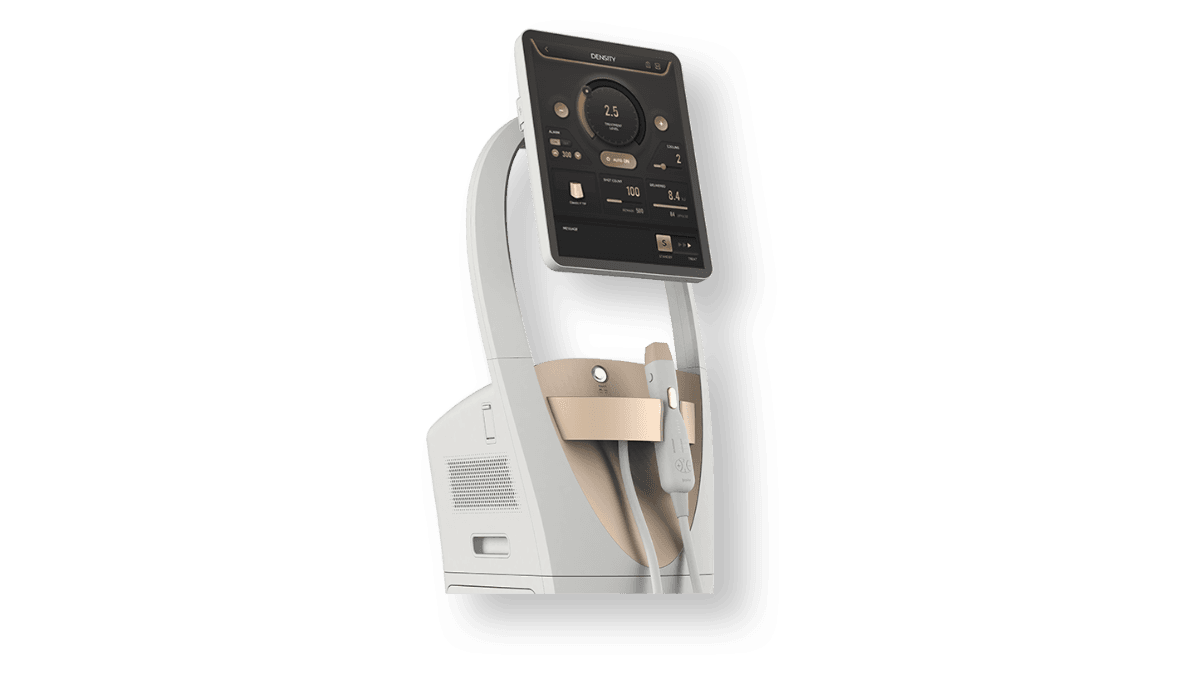
Nervous about injections? We can also deliver Rejuran or Plinest with an injector gun, an automated skin booster device. Instead of many separate injections by hand, it uses a head of very fine needles with gentle suction. With each pulse, it places an even, measured amount of booster at the same depth across the skin.
The suction gently lifts the skin as the needles enter, which helps reduce discomfort and bruising. Most patients find it gentler and quicker than manual injections, and there is usually no downtime. It feels almost needle-free, so it is a good choice if you are nervous about injections.
| Manual injection | Injector gun | |
|---|---|---|
| How it works | Doctor places each injection by hand | Automated device with very fine needles and gentle suction |
| Comfort | Numbing cream; small pinches | Numbing cream; gentler, with suction to reduce discomfort |
| Downtime | Small bumps for 1 to 2 days | Usually no downtime |
| Best for | Precise placement in specific areas | Even coverage, and patients who are nervous about injections |
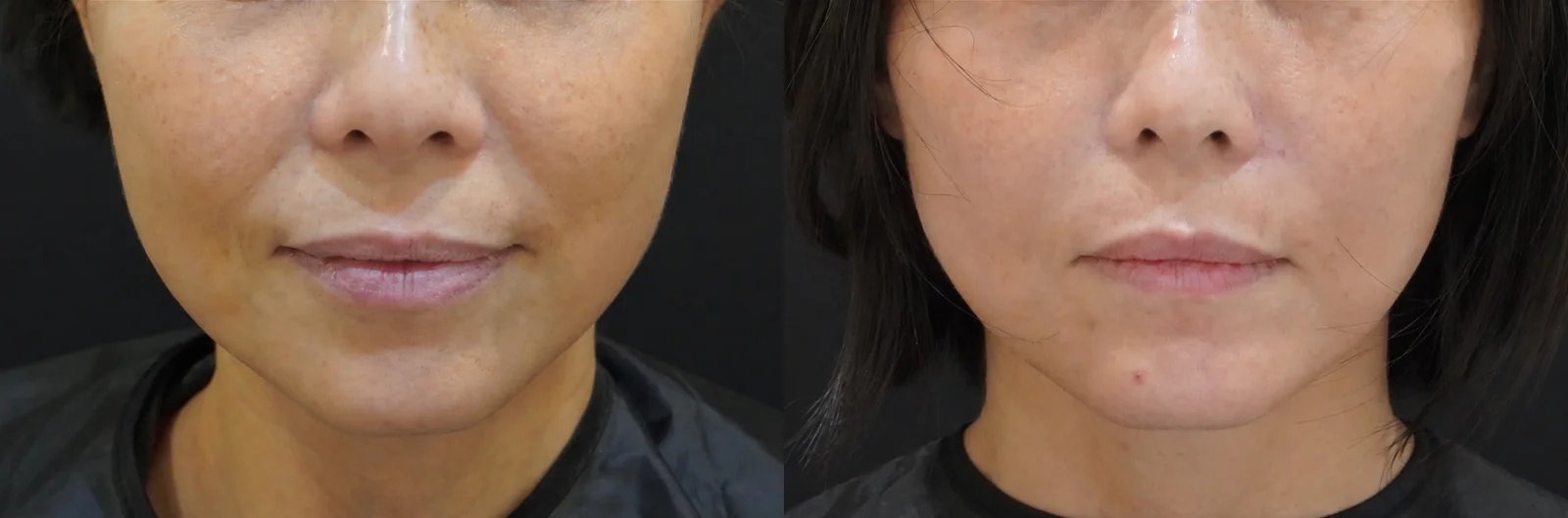
Plinest before and after
This is a real patient treated at Verve Clinic. Results vary from person to person.
Who is a good candidate for Rejuran or Plinest?
You may be a good candidate if you:
- have dull, tired, dehydrated or sensitive skin that skincare alone has not improved
- have skin that has been damaged by the sun
- notice fine lines, rough texture or enlarged pores
- want healthier, more radiant skin without changing your features
- are interested in PDRN and want treatment with real evidence behind it
Are Rejuran and Plinest safe?
Yes. Polynucleotides have been used in medicine for decades, and side effects are usually mild and short-lived: small bumps, mild redness or small bruises that settle within a few days.
Treatment is postponed during pregnancy and breastfeeding, and if you have an active skin infection in the treatment area. Because Rejuran is derived from salmon, tell your doctor if you have a fish or salmon allergy.
A note from Dr. Adriene Chee: “Patients often show me the PDRN serum they have been using and ask if it is the same as Rejuran. I tell them honestly: it is a nice moisturiser, but it cannot reach where PDRN needs to work. If you want the real benefits of PDRN, it needs to go into the skin, and that is what we do in clinic.”
Frequently asked questions
What is PDRN?
PDRN (polydeoxyribonucleotide) is made of small fragments of DNA, usually taken from salmon. It has been used in medicine for decades to support wound healing, and in aesthetics it is injected into the skin to help it repair and renew.
Is PDRN really made from salmon sperm?
Most PDRN is purified from salmon reproductive cells, which is why it is nicknamed “salmon sperm” or “salmon DNA”. The DNA is highly purified, so it contains no fish cells or proteins. Plant and bacteria-derived versions, sold as “vegan PDRN”, also exist.
Do PDRN serums and creams work?
They can leave skin feeling hydrated and comfortable, but this is usually thanks to other ingredients in the formula, such as hyaluronic acid, peptides and glycerin. PDRN molecules are too large to pass through intact skin, so a serum is unlikely to deliver the repair and collagen benefits seen with injected PDRN.
Is PDRN skincare safe?
PDRN skincare is generally well tolerated. As with any new product, patch test first, and check the ingredients if you have a fish allergy, since most PDRN comes from salmon.
Is vegan PDRN as good as salmon PDRN?
It is too early to say. Vegan PDRN comes from plants or bacteria, and its fragments are often smaller. Most of the research so far is in the laboratory, with only one small published study in people, so its benefits are not yet proven.
Can a PDRN serum replace Rejuran or Plinest?
No. Injected treatments place polynucleotides directly into the deeper layer of the skin, where they can act. A serum stays mostly on the surface, so it cannot give the same results.
What is the difference between PDRN and PN?
Both are DNA fragments. PN (polynucleotides) have longer chains and a higher molecular weight than PDRN, and form a supportive mesh in the skin. Rejuran and Plinest are polynucleotide treatments.
What is the difference between Rejuran and Plinest?
Both are injectable polynucleotide skin boosters that improve skin quality. Rejuran (丽珠兰) is made in Korea from salmon DNA, and Plinest is made in Italy from purified polynucleotides. Your doctor will recommend the one that suits your skin.
How many sessions of Rejuran do I need?
Most patients need 3 sessions, 4 weeks apart, followed by a maintenance session every 6 to 12 months.
How many sessions of Plinest do I need?
Most patients need 3 sessions, 4 weeks apart, followed by a maintenance session every 6 to 12 months.
Is Plinest suitable for sensitive skin?
Yes. Plinest is a good choice for thin, sensitive or reactive skin, and for skin recovering from sun damage or sunburn, because it supports the skin’s natural repair.
Can Rejuran or Plinest be done without manual injections?
Yes. We can deliver Rejuran or Plinest with an injector gun, an automated device with very fine needles and gentle suction. It feels almost needle-free: most patients feel very little discomfort, and there is usually no downtime.
Does Rejuran hurt?
We apply numbing cream before treatment, and we also offer Rejuran HB, which contains a local anaesthetic, for a more comfortable treatment. Most patients feel small pinches.
Is there downtime after Rejuran or Plinest?
You may have small raised bumps at the injection points, which usually settle within 1 to 2 days. Mild redness or small bruises are possible.
When will I see results?
Many patients notice brighter, more hydrated skin within a few weeks of the first session. The result builds with each session as the skin repairs and renews.
Should I stop using my PDRN serum?
Not if you enjoy it. A well-formulated PDRN serum can be a good moisturiser. Just keep your expectations realistic, and do not rely on it for the results of an in-clinic treatment.
Can I have Rejuran if I am allergic to fish?
Tell your doctor about any fish or salmon allergy before treatment. Because Rejuran is derived from salmon, your doctor may recommend a different skin booster.
Who should not have PDRN or polynucleotide injections?
These treatments are postponed during pregnancy and breastfeeding, and if you have an active skin infection in the treatment area. Let your doctor know about any allergies.
How much does Rejuran or Plinest cost?
It depends on the treatment and the number of sessions, so we give a personalised quote after your assessment. WhatsApp us for a quote.
Want the real benefits of PDRN?
At Verve Clinic in Petaling Jaya, a doctor will assess your skin and recommend Rejuran, Plinest or another skin booster that suits you. Read more about our skin boosters, or WhatsApp us to arrange your assessment.
About the author
Dr. Adriene Chee is the Medical Director of Verve Clinic in Petaling Jaya. She has more than 10 years of experience. Her qualifications include an MD from the National University of Malaysia (UKM), a Postgraduate Diploma in Dermatology (Bangkok) and an LCP in Aesthetic Medicine. Meet our team.
This article is general information, not medical advice. Results vary from person to person. Please discuss the benefits and risks of any treatment with a qualified doctor.