Loose, less firm skin on the face, crepey eyelids or a looser neck? How Density RF (无双电波) tightens skin with two types of radiofrequency, how it compares with Thermage (热玛吉) and HIFU (超声刀), and what to expect
Medically reviewed by Dr. Adriene Chee, Medical Director, Verve Clinic. Last updated: October 2026.
It often starts quietly. Your face looks a little less firm and lifted in photos. Your eyelids feel heavier, and concealer settles into fine lines. The skin on your neck is not as firm as it used to be. You are not ready for surgery, and you would rather avoid needles, but you would like your skin to look firmer and more lifted.
This is where skin tightening treatments come in, and Density RF is one of the newest. In this guide, Dr. Adriene Chee, a doctor with more than 10 years of experience, explains how Density RF works, what it can do for the face, eyes and neck, and how it compares with Thermage and HIFU.
What is Density RF (无双电波)?
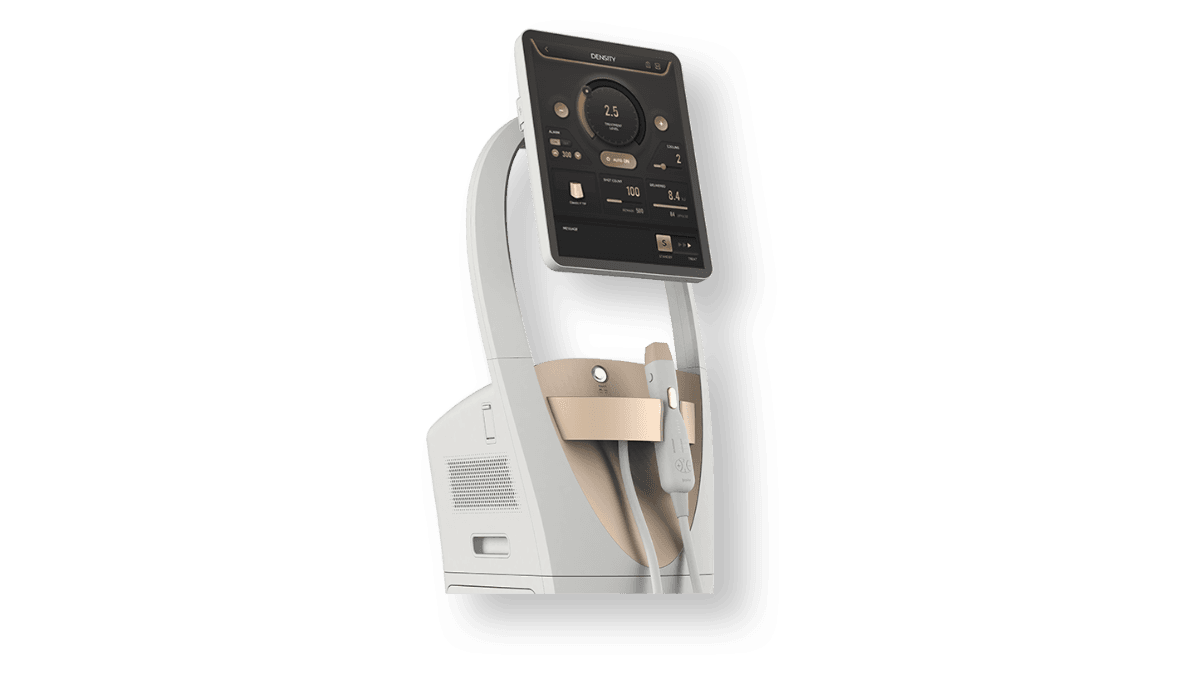
In short: Density RF (无双电波) is a non-invasive radiofrequency treatment that tightens and lifts loose skin on the face, eyes and neck. It combines two types of radiofrequency to heat both the deeper and upper layers of the skin, with built-in cooling and no needles. Most patients need one session, with little to no downtime.
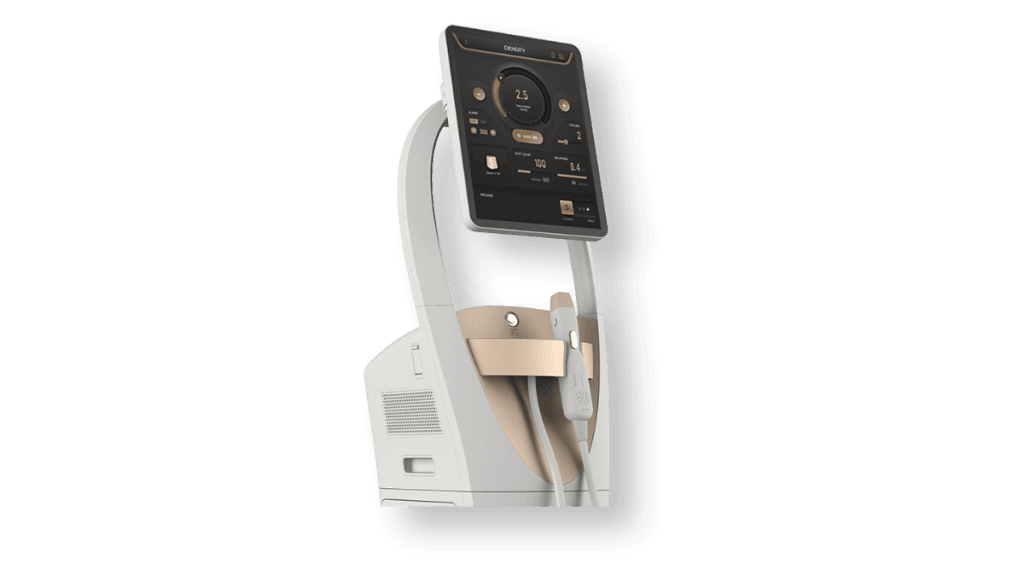
Density RF is made by Jeisys, a Korean medical device company also known for Potenza RF microneedling. Most radiofrequency tightening devices use one type of radiofrequency. Density RF uses two in a single treatment, monopolar and bipolar, delivered at 6.78 MHz, while a cryogen cooling spray protects the skin surface before, during and after each pulse.
How does Density RF work?
It works by gently heating the skin. The heat makes existing collagen fibres contract, which gives some immediate firmness, and it prompts the skin to build new collagen over the following weeks, which gives a longer-lasting result. Think of a wool jumper that tightens slightly after a warm wash, followed by the skin quietly reinforcing itself from within.
What makes it different is that it heats two layers in one treatment:
| Type of radiofrequency | Where it works | What it does |
|---|---|---|
| Monopolar | Deeper layers of the skin | Tightens and builds collagen in the deeper skin, for firmness and lift |
| Bipolar | Upper layers of the skin | Firms the surface, improving fine lines, crepiness and texture |
| Cooling | Skin surface | Protects the surface and keeps treatment comfortable |
In a 2022 animal study on aged skin, combining monopolar and bipolar radiofrequency increased collagen and elastin more than either type used alone. This is the principle behind Density RF.
What can Density RF treat?
It treats early to moderate loose skin across the face, around the eyes and on the neck. It has interchangeable tips, including a small eye tip for the delicate skin of the eyelids.
| Area | Common concerns | What Density RF does |
|---|---|---|
| Full face | Loss of firmness, sagging cheeks, softer facial contours, fine lines and crepey skin | Tightens and lifts the skin across the whole face for a firmer, more defined look |
| Eyes | Hooded or heavy upper lids, crepey lower lids, fine lines | Firms the thin skin of the eyelids and softens fine lines |
| Neck | Loose neck skin, neck lines | Tightens and smooths the skin of the neck |
Density RF vs Thermage vs HIFU vs Matrix RF microneedling: what is the difference?
All three tighten or lift skin without surgery, but they work in different ways. Thermage (热玛吉) uses monopolar radiofrequency to heat the deeper skin. HIFU (超声刀) uses focused ultrasound to lift the deeper supporting layer beneath the skin. Matrix RF microneedling (翡翠电波) delivers radiofrequency through fine needles at set depths. Density RF (无双电波) combines monopolar and bipolar radiofrequency, so it treats both the deeper and upper layers of the skin in one treatment, with no needles.
| Density RF (无双电波) | Thermage (热玛吉) | HIFU (超声刀) | Matrix RF microneedling (翡翠电波) | |
|---|---|---|---|---|
| Energy | Monopolar and bipolar radiofrequency | Monopolar radiofrequency | Focused ultrasound | Radiofrequency through fine needles |
| Main layer treated | Deeper and upper layers of the skin | Deeper layers of the skin | Supporting layer beneath the skin | Deeper skin, at up to three set depths |
| Best for | Tightening and firming skin, including eyelids | Tightening and firming skin, including eyelids | Lifting sagging tissue | Tightening plus wrinkles, acne scars and texture |
| Eye area | Yes, with a dedicated eye tip | Yes, with a dedicated eye tip | Not on the eyelids | Under-eye area |
| Sessions | Usually one, with maintenance | Usually one, with maintenance | Usually 3, with maintenance | Usually 3, 4 to 6 weeks apart |
| Downtime | Little to none | Little to none | Little; may feel tender for a few days | 1 to 2 days of pinkness |
Which should you choose? Density RF and Thermage are both designed to tighten the skin itself, while HIFU lifts the layer beneath it. That is why we often combine it with HIFU for patients who need both: HIFU for the deeper lift, and Density RF for firmer, smoother skin on top. If you also have wrinkles, acne scars or uneven texture, Matrix RF microneedling may suit you better, as it tightens and resurfaces at the same time.
What happens during a Density RF treatment?
A Density RF treatment takes about 45 to 60 minutes, including numbing. Your doctor assesses your skin, applies numbing cream, then moves the handpiece across each area in passes while the device cools your skin.
- Consultation and skin assessment. Your doctor looks at your skin, the degree of laxity and your goals, and plans which areas to treat.
- Numbing cream. We apply numbing cream to keep you comfortable.
- Density RF treatment. The handpiece delivers warm radiofrequency pulses, with cooling sprays before, during and after each one.
- Soothing care. Your skin is calmed and you receive simple aftercare advice. You can usually go straight back to your day.
| Quick facts | |
|---|---|
| Sessions | One session for most patients, with maintenance every 6 to 12 months |
| Treatment time | About 45 to 60 minutes, including numbing |
| Comfort | Numbing cream and built-in cooling; you feel warm pulses |
| Downtime | Little to none; mild pinkness for a few hours |
| Results | Some firmness straight away, building over 2 to 3 months |
| Lasts | About 6 to 12 months |
| Areas | Full face, eyes and neck |
When will I see results, and how long do they last?
Many patients notice some firmness straight after treatment, and the result keeps improving for 2 to 3 months as new collagen forms. Results usually last 6 to 12 months.
| When | What you may notice |
|---|---|
| Straight after | Skin feels firmer and smoother; mild pinkness that settles within hours |
| After 1 month | Skin looks tighter as collagen starts to rebuild |
| At 2 to 3 months | Full result: a firmer, more lifted face, smoother eyelids and neck |
| 6 to 12 months | Time for a maintenance session to keep the result |
Can Density RF be combined with other treatments?
Yes, and for many patients a combination gives the most natural result. Ageing affects several layers at once: the skin loosens, the deeper tissue sags and the face loses volume. Density RF tightens the skin, and other treatments take care of the rest.
| Combined with | Why it helps |
|---|---|
| HIFU | Lifts the deeper supporting layer while Density RF tightens the skin above it |
| AestheFill or filler | Restores lost volume, which tightening alone cannot replace |
| Aptos thread lift | Lifts heavier sagging of the cheeks and lower face |
| Skin boosters | Improves hydration, glow and overall skin quality |
Your doctor will plan the order and timing of each treatment. If you are deciding between volume treatments, our guide Dermal Fillers vs Collagen Biostimulators explains how they differ.
What does the research say?
Radiofrequency skin tightening has been studied for more than 20 years. A 2021 review in Plastic and Aesthetic Research explains that radiofrequency heat contracts existing collagen and stimulates new collagen, with results appearing gradually over 3 to 6 months. In a split-face study described in the review, monopolar radiofrequency and focused ultrasound improved skin laxity to a similar degree.
Density RF itself is newer, so research on the device is still growing. In a 2025 case series in Clinical, Cosmetic and Investigational Dermatology, 5 patients with skin type IV, a skin type common in Malaysia, had a single Density RF session. All showed improved firmness, 3 of the 5 had a visible brow lift, and no side effects were reported. It is a small study, but the results are consistent with what we see in clinic.
Is Density RF safe?
Yes. The treatment is non-invasive, and the built-in cooling and real-time energy control protect the skin surface. Most patients have only mild, temporary pinkness or warmth after treatment.
It is not suitable during pregnancy, if you have a pacemaker or other implanted electronic device, or if you have an open wound or active skin infection in the treatment area. Let your doctor know if you have metal implants in the face.
Who is a good candidate for Density RF?
You may be a good candidate if you:
- have early to moderate loose skin on the face, eyelids or neck
- notice crepey skin or fine lines around the eyes
- want firmer, lifted skin without needles or surgery
- prefer a treatment with little to no downtime
- want to maintain your skin before sagging becomes more noticeable
If sagging is more advanced, your doctor may suggest combining it with HIFU, a thread lift or volume treatments for a better result.
A note from Dr. Adriene Chee: “Many of my patients do not want to look different. They want to look like themselves on a good day: a firmer, lifted face, brighter eyes, a smoother neck. Density RF suits them well, because it tightens two layers of the skin in one comfortable session, and they can go straight back to their day.”
Frequently asked questions
What is 无双电波?
无双电波 is the Chinese name for Density RF. It is a non-invasive radiofrequency treatment that tightens and lifts loose skin on the face, around the eyes and on the neck, with no needles.
How many Density RF sessions will I need?
Most patients need one session. To keep the result, we recommend a maintenance session every 6 to 12 months.
When will I see results from Density RF?
Many patients notice some firmness straight after treatment. The result then builds over the next 2 to 3 months as the skin forms new collagen.
How long do Density RF results last?
Results usually last 6 to 12 months. Because your skin keeps ageing, a maintenance session every 6 to 12 months helps you keep the result.
Is Density RF painful?
Most patients find it comfortable. We apply numbing cream first, and the device cools the skin before, during and after each pulse. You will feel warm pulses, which some patients describe as a brief, deep heat.
Is there downtime after Density RF?
There is little to no downtime. Your skin may look slightly pink for a few hours, and most patients return to work and wear make-up the same day.
Is Density RF better than Thermage?
Both use radiofrequency to tighten skin with no needles. Thermage uses monopolar radiofrequency, which heats the deeper layers. Density RF combines monopolar and bipolar radiofrequency in one treatment, so it heats both the deeper and the upper layers of the skin. Your doctor will recommend the option that suits your skin.
What is the difference between Density RF and HIFU?
Density RF uses radiofrequency to tighten the skin itself, while HIFU uses focused ultrasound to lift the deeper supporting layer under the skin. They work at different depths, so they are often combined for a more complete lift.
What is the difference between Density RF and Matrix RF microneedling?
Matrix RF microneedling uses fine needles to deliver radiofrequency into the skin, so it also treats wrinkles, acne scars and texture. Density RF uses no needles and focuses on tightening and lifting the skin. Your doctor will recommend the one that suits your concerns, and some patients benefit from both.
What age is Density RF suitable for?
Most of our patients for this treatment are in their 30s to 60s, from the first signs of loose skin. Starting early helps maintain firmness before sagging becomes more noticeable.
Can Density RF treat hooded or droopy eyelids?
Yes, for mild to moderate cases. It has a small eye tip that can treat the skin of the upper and lower eyelids, helping to firm crepey skin and soften fine lines around the eyes. Severe hooding may need a surgical opinion.
Can Density RF tighten the neck?
Yes. It can firm loose neck skin and soften neck lines, and it is often treated together with the face.
Is Density RF suitable for Asian skin?
Yes. Radiofrequency heats the deeper layers of the skin and does not target skin pigment, so it is suitable for all skin types, including Asian skin.
Can men have Density RF?
Yes. Men use it to firm loose skin on the face and neck, with no needles and no visible downtime.
Can I combine Density RF with filler or AestheFill?
Yes. It tightens skin, but it cannot replace lost volume. Combining it with filler or AestheFill restores volume as well, for a more natural, lifted result. Your doctor will plan the order and timing.
Who should not have Density RF?
It is not suitable during pregnancy, if you have a pacemaker or other implanted electronic device, or if you have an open wound or active skin infection in the treatment area. Tell your doctor about any metal implants in the face.
How much does Density RF cost?
It depends on the areas treated, so we give a personalised quote after your assessment. WhatsApp us for a quote.
Ready for firmer, lifted skin without needles?
At Verve Clinic in Petaling Jaya, a doctor will assess your skin and plan a Density RF treatment, alone or combined with other treatments, around your goals. Read more about our Density RF treatment, or WhatsApp us to arrange your assessment.
About the author
Dr. Adriene Chee is the Medical Director of Verve Clinic in Petaling Jaya. She has more than 10 years of experience. Her qualifications include an MD from the National University of Malaysia (UKM), a Postgraduate Diploma in Dermatology (Bangkok) and an LCP in Aesthetic Medicine. Meet our team.
This article is general information, not medical advice. Results vary from person to person. Please discuss the benefits and risks of any treatment with a qualified doctor.