
Exosomes (外泌体) are all over social media, promising glass skin and thicker hair. What are they really, what can they do for your skin and hair, and what should you check before trying them?
Medically reviewed by Dr. Adriene Chee, Medical Director, Verve Clinic. Last updated: 24 November 2026.
If you follow skincare or aesthetics online, you have probably seen them described as the next big thing: the secret to glass skin, faster healing and thicker hair. Searches for them in Malaysia have grown by around half in the past year. With so much hype, it is hard to know what is real.
In this guide, Dr. Adriene Chee, a doctor with more than 10 years of experience, explains what they are, what the evidence shows so far, how we use them at Verve Clinic, and what to be careful of.
What are exosomes?
In short: Exosomes (外泌体, eksosom) are tiny particles that cells release to send signals to other cells. In aesthetic medicine, exosome treatment is used to support skin repair and rejuvenation, help the skin recover after microneedling or laser, and support thinning hair. The evidence is promising but still developing, so exosomes work best as part of a planned treatment.
They are a type of extracellular vesicle, about 30 to 150 nanometres across, according to a 2025 review in the Journal of Drugs in Dermatology. They carry proteins, lipids and genetic material from one cell to another, acting like messages that tell cells to repair, calm inflammation or produce collagen.
Products used in aesthetics are made in a laboratory from cells or plants, then purified. They do not contain living cells. Their effect depends on the source, the processing and how they are delivered into the skin or scalp.
What does the evidence say?
Research in this area has grown quickly. A 2025 review in the International Journal of Dermatology reported clinical studies showing benefits for skin ageing, scarring, hair restoration and melasma. At the same time, reviewers agree that:
- most studies are small, and many lack a comparison group;
- products differ widely in source, purity and strength, so results from one product do not always apply to another;
- long-term safety data are still limited; and
- there is not yet an agreed standard for how products are made and tested.
In our view, they are a useful tool for skin quality and recovery, and for supporting hair, especially alongside proven treatments. They are not a replacement for treatments with stronger evidence, and they are not a miracle cure.
How exosomes are used at Verve Clinic
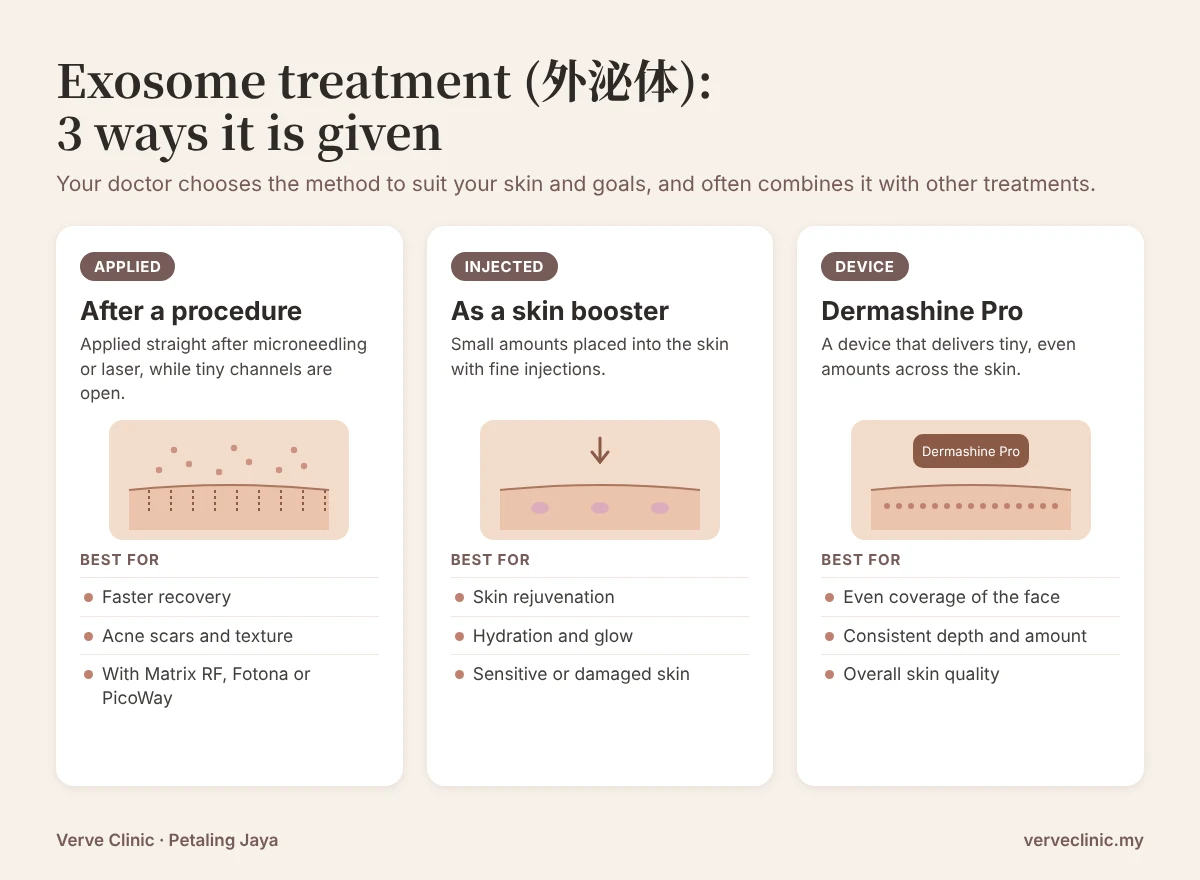
We use them in three ways, depending on your skin and goals:
| Method | How it works | Best for |
|---|---|---|
| Applied after a procedure | Applied straight after microneedling or laser, while tiny channels in the skin are open | Faster recovery and better results after Matrix RF microneedling, Fotona or PicoWay |
| Injected as a skin booster | Small amounts are placed into the skin with fine injections | Overall skin rejuvenation, hydration and glow |
| Dermashine Pro | A device that delivers tiny, even amounts across the skin | Even coverage over the face, with a consistent depth and amount |
Exosomes for the skin
For the face, the aim is better skin quality rather than a change in your features. As one of our skin boosters, this treatment is chosen for skin repair and recovery and for overall rejuvenation.
- Skin rejuvenation: more hydrated, smoother and brighter-looking skin, with support for collagen.
- Recovery after procedures: applied after Matrix RF microneedling or laser, it may help the skin calm and settle faster.
- Acne scars and texture: used alongside microneedling or laser as part of acne scar treatment.
- Sensitive or reactive skin: for irritated skin, for example after an allergic reaction, or skin that needs repair before or between stronger treatments.
For the skin, treatment is usually 3 to 5 sessions about 4 weeks apart, followed by maintenance. Most people notice more hydrated, glowing skin within 1 to 2 weeks, and results typically last 9 to 12 months after a full course. Injections may leave small bumps for 24 to 48 hours.
Exosomes for hair loss
Hair exosome therapy delivers these signals to the scalp, where they help calm inflammation and support the hair follicles. It suits early to moderate thinning in men and women, increased shedding, and thinning after stress, illness or childbirth.
Treatment is usually 3 to 5 sessions, 4 weeks apart, with no downtime. Shedding usually slows within 1 to 3 months, and thicker hair shows from about 3 to 6 months. The treatment works best where hair follicles are still present, and areas that are completely bald do not regrow. Because hair loss has many causes, we examine your scalp first and may suggest blood tests. Read our hair loss treatment guide for more.
They are also used in some intimate rejuvenation treatments for women and men, which we discuss privately at consultation.
Combining exosomes with other treatments
They usually work best as a partner to other treatments, rather than on their own.
- Exosomes + Matrix RF microneedling: for acne scars, texture and skin tightening, with faster recovery.
- Exosomes + Fotona or PicoWay laser: for skin rejuvenation and pigmentation, helping the skin settle.
- Exosomes + other skin boosters: for hydration and collagen support in one plan.
- Hair exosomes + Fotona HAIRestart or PRF: for a stronger result for thinning hair.
Exosome skincare vs exosome treatment at a clinic
Exosomes now appear in serums, ampoules and masks sold online. These products are applied to intact skin, and the outer layer of the skin is designed to keep large particles out, so very little is likely to reach the deeper skin where collagen is made. They may help hydration and comfort, but they are not the same as a clinic treatment.
At a clinic, exosomes are delivered into the skin, either through tiny channels created by microneedling or laser, by injection, or with a device such as Dermashine Pro. This places them where they are meant to work, at a concentration chosen by your doctor, and as part of a plan that may include other treatments.
| Exosome skincare at home | Exosome treatment at a clinic | |
|---|---|---|
| How it is used | Applied to intact skin | Delivered into the skin after microneedling or laser, by injection, or with a device |
| What to expect | Mainly hydration and comfort | Skin repair, rejuvenation and support for recovery |
| Who plans it | You choose the product | A doctor assesses your skin and plans the treatment |
Exosomes vs PDRN vs PRF
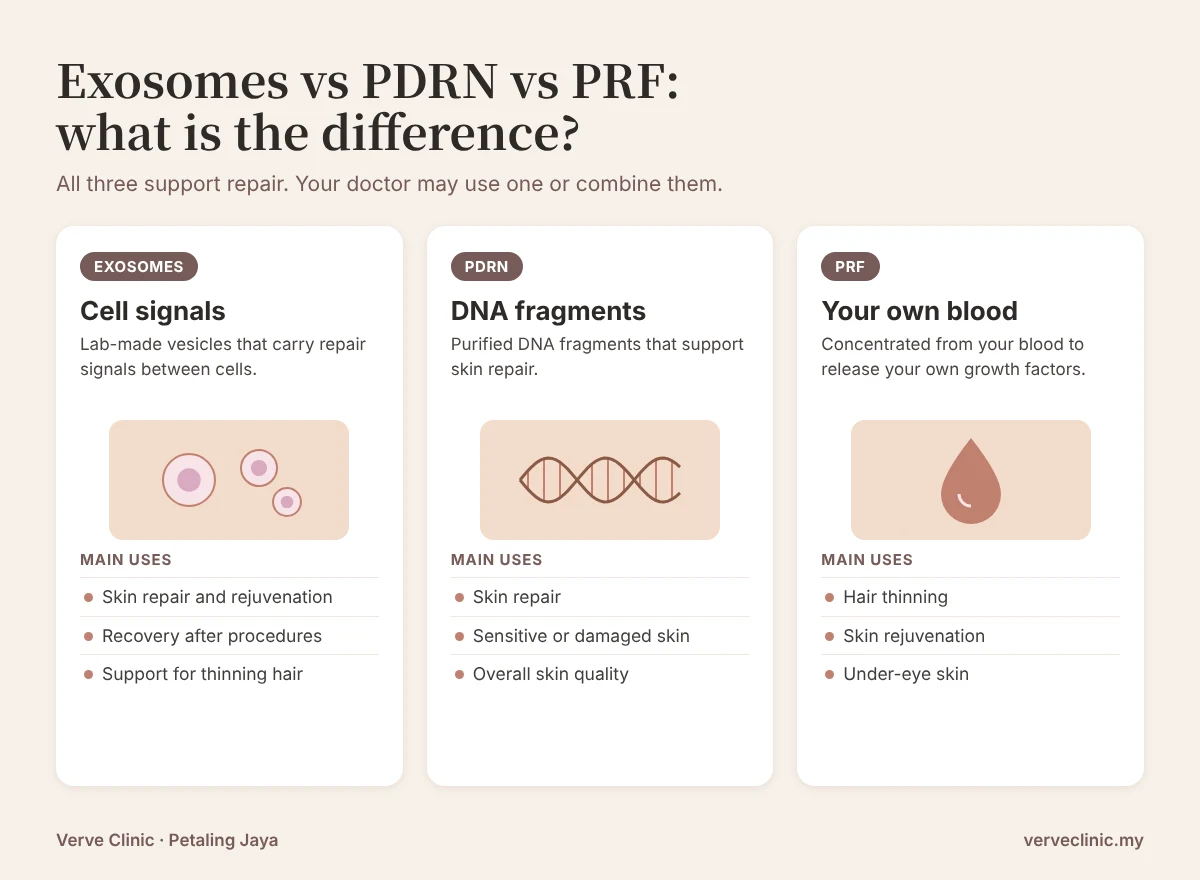
| Treatment | What it is | Main use |
|---|---|---|
| Exosomes | Lab-made vesicles that carry signals between cells | Skin repair, rejuvenation, recovery after procedures, hair support |
| PDRN | DNA fragments that support repair | Skin repair and sensitive skin |
| PRF | Your own blood, concentrated to release your own growth factors | Hair thinning, skin rejuvenation and under-eye skin |
All three support repair, and they are sometimes combined. Our article on PDRN and the hype around it takes a similar honest look at another popular ingredient.
Who is exosome treatment suitable for?
It suits adults who want to improve skin quality, recover faster after microneedling or laser, or support early hair thinning. It is a good option for people who prefer a gentle treatment that works on skin health rather than changing their features.
- Good candidates: dull, dehydrated or tired-looking skin; early fine lines; uneven texture or acne scars as part of a combined plan; sensitive skin that needs repair; early to moderate hair thinning.
- Less suitable: deep wrinkles, sagging or volume loss, which respond better to lifting, tightening or volume treatments; completely bald areas of the scalp.
- Postpone treatment: during pregnancy and breastfeeding, with an active infection in the area, or with a known allergy to any ingredient.
What to expect at your treatment
- Consultation: your doctor examines your skin or scalp, discusses your goals and explains honestly whether this treatment is likely to help.
- Your plan: we decide whether to apply, inject or use Dermashine Pro, and whether to combine it with microneedling, laser or other boosters.
- Treatment day: numbing cream is used for injections and microneedling, so most people feel only mild discomfort.
- Aftercare: avoid makeup for the rest of the day, use gentle skincare and daily sunscreen, and avoid strenuous exercise for 1 to 2 days and saunas for a week.
When to plan exosome treatment before an event
If you are preparing for a wedding, holiday or special occasion, plan ahead. For the skin, most people notice more hydrated, glowing skin within 1 to 2 weeks, but the best result usually comes after a course of sessions about 4 weeks apart. Starting 2 to 3 months before the event allows time for a full course. If exosomes are combined with microneedling or laser, allow at least 1 to 2 weeks after the last session for any redness to settle. For hair, start at least 3 to 6 months ahead, because thicker hair takes time to show.
What to be careful of
- Product quality: products differ in source, purity and strength. Ask your doctor what product is used and where it comes from.
- Who gives the treatment: injections and devices should be done by a trained doctor in a clean medical setting.
- Unrealistic promises: be wary of claims that one ingredient replaces every other treatment or give permanent results.
- Medical history: tell your doctor if you are pregnant or breastfeeding, have an infection, an allergy, or a history of cancer.
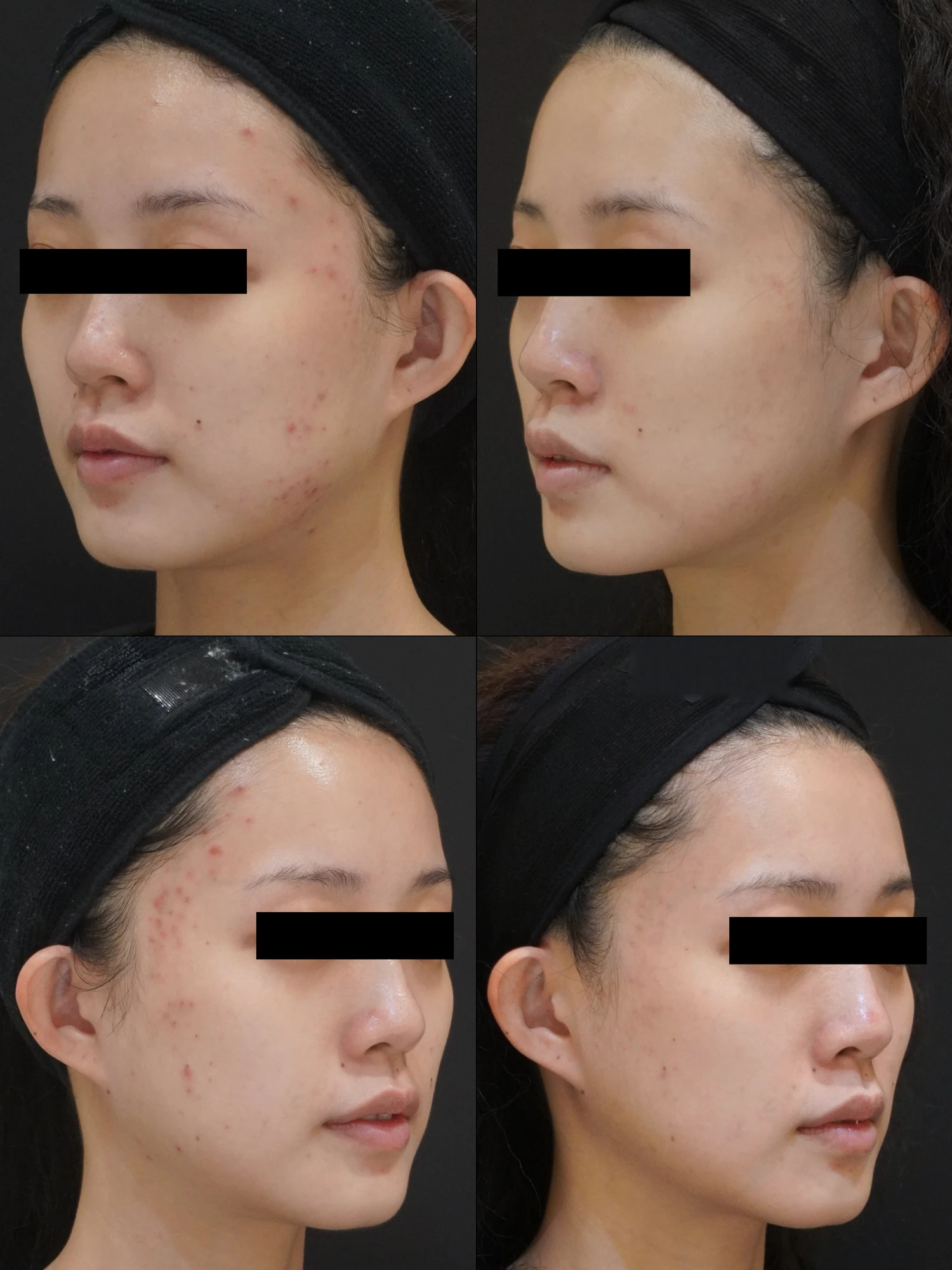
Exosome treatment before and after
Are exosomes worth it?
A note from Dr. Adriene Chee: “Exosomes are one of the most talked-about treatments right now, and they can help the skin heal and look healthier, especially alongside microneedling or laser. But they are not a miracle. We use them where they add value, and we are honest about what they can and cannot do.”
| Exosome treatment quick facts | |
|---|---|
| What it is | Tiny cell-signalling particles that support repair and rejuvenation |
| Used for | Skin rejuvenation, recovery after microneedling or laser, acne scars and texture, thinning hair |
| How it is given | Applied after a procedure, injected as a skin booster, or with Dermashine Pro |
| Sessions | Usually 3 to 5, about 4 weeks apart |
| Downtime | Little or none; small bumps for 24 to 48 hours if injected |
| Evidence | Promising but still developing; best as part of a planned treatment |
How much does exosome treatment cost in Malaysia?
The cost depends on the area treated, how the exosomes are given, whether they are combined with another treatment, and the number of sessions. That is why we give a personalised quote after your consultation, rather than a fixed package.
Frequently asked questions
What are exosomes?
Exosomes (外泌体) are tiny particles, about 30 to 150 nanometres across, that cells release to send signals to other cells. They carry proteins, lipids and genetic material. In aesthetic medicine, exosome products are used to support skin repair, rejuvenation and hair growth.
What does exosome treatment do for the skin?
They are thought to support skin repair, calm inflammation and help the skin produce collagen. Most people use them to improve skin quality, glow and texture, and to help the skin recover after microneedling or laser.
Does exosome treatment really work?
Early studies and clinical experience are encouraging for skin rejuvenation, healing after procedures and hair thinning, but the evidence is still developing. Most studies are small, and products vary. They work best as part of a planned treatment, not as a quick fix on their own.
Are exosomes safe?
Products used by doctors are generally well tolerated, with mild redness, swelling or small bumps for a day or two. The main concern is product quality, because products vary in source and purity. Choose a doctor who can tell you what product is used and where it comes from.
How are exosomes given?
At Verve Clinic, they can be applied to the skin straight after microneedling or laser, injected as a skin booster, or delivered with the Dermashine Pro device, which places tiny, even amounts into the skin.
How many sessions do I need?
For the skin, usually 3 to 5 sessions about 4 weeks apart, followed by maintenance. For hair, usually 3 to 5 sessions 4 weeks apart.
When will I see results?
For the skin, most people notice more hydrated, glowing skin within 1 to 2 weeks. For hair, shedding usually slows within 1 to 3 months, and thicker hair shows from about 3 to 6 months.
How long do exosome results last?
For the skin, typically 9 to 12 months after a full course, with maintenance sessions to keep the results. Hair results depend on the cause of hair loss and ongoing care.
Is there downtime?
Very little. Injections may leave small bumps for 24 to 48 hours. When they are applied after microneedling or laser, the downtime is that of the procedure, and they may help the skin settle faster. Hair exosome therapy has no downtime.
Exosomes vs PDRN vs PRF: what is the difference?
PDRN is made from DNA fragments and supports repair. PRF is made from your own blood and releases your own growth factors. Exosomes are vesicles that carry signals between cells. All three support repair and rejuvenation, and your doctor will suggest which suits your skin or hair best, sometimes in combination.
Do exosome serums work?
Exosome serums and ampoules applied to intact skin mainly help hydration and comfort. Because the outer skin layer keeps large particles out, little is likely to reach the deeper skin. Clinic treatments deliver exosomes into the skin, which is where they are meant to work.
Can exosomes help acne scars?
They can support acne scar treatment, mainly by helping the skin recover and improving texture when applied after Matrix RF microneedling or laser. On their own, they are not enough for deep acne scars.
Are exosomes the same as skin boosters?
Exosomes are one type of skin booster. Other boosters use hyaluronic acid, polynucleotides or collagen-stimulating ingredients. Your doctor will choose the booster, or combination, that suits your skin.
Who should not have exosome treatment?
We postpone treatment during pregnancy and breastfeeding, with an active infection in the area, or with a known allergy to any ingredient. People with a history of cancer should discuss it with their doctor first.
What are 外泌体 and eksosom?
外泌体 is the Chinese term for exosomes, and eksosom is the Malay term.
How much does exosome treatment cost in Malaysia?
It depends on the area treated, how the exosomes are given, whether they are combined with another treatment, and the number of sessions. WhatsApp us for a personalised quote after your consultation.
Curious whether exosomes suit you?
If you are considering exosome treatment in Petaling Jaya, Verve Clinic welcomes patients from Kuala Lumpur, PJ and across the Klang Valley. A doctor will assess your skin or scalp, explain honestly whether exosomes are likely to help, and plan the treatment that suits you. WhatsApp us to arrange your consultation and a personalised quote.
About the author
Dr. Adriene Chee is the Medical Director of Verve Clinic in Petaling Jaya. She has more than 10 years of experience. Her qualifications include an MD from the National University of Malaysia (UKM), a Postgraduate Diploma in Dermatology (Bangkok) and an LCP in Aesthetic Medicine. Meet our team.
This article is general information, not medical advice. Results vary from person to person. Please discuss the benefits and risks of any treatment with a qualified doctor.