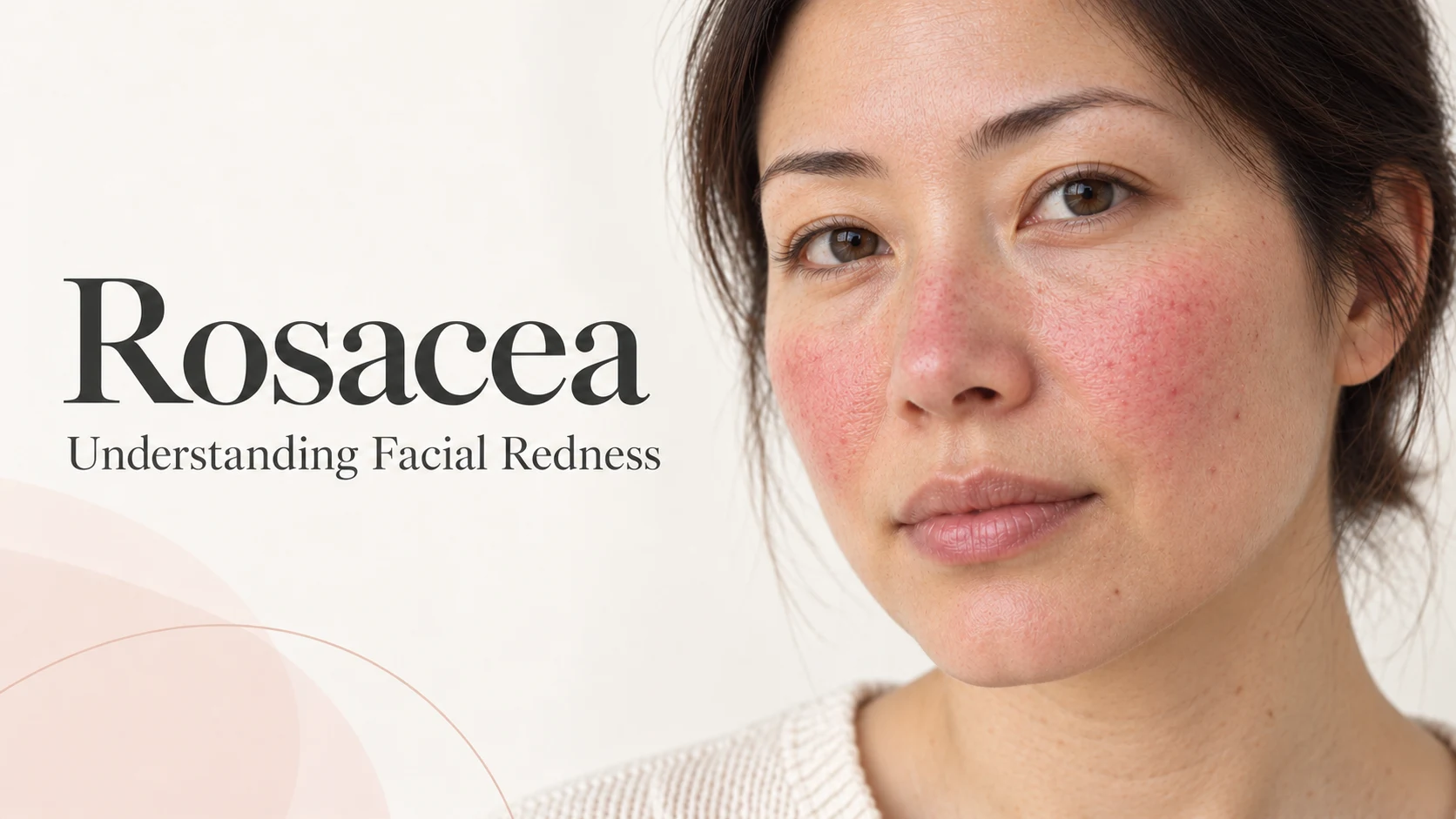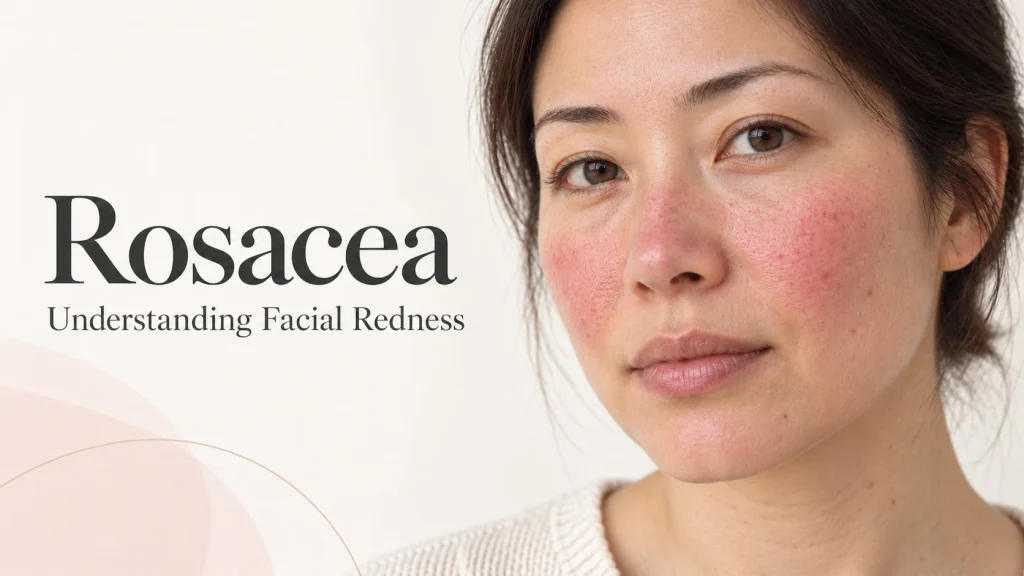
Cheeks that flush at the slightest thing, redness that never fully fades, bumps that are not quite acne? What rosacea (玫瑰痤疮) and facial flushing (面部潮红) really are, what triggers them, and how rosacea treatment can bring calm back to your skin
Medically reviewed by Dr. Adriene Chee, Medical Director, Verve Clinic. Last updated: November 2026.
You walk from an air-conditioned car into the Malaysian heat, and your cheeks turn red. A bowl of spicy noodles, a hot coffee or a stressful meeting does the same. Your skin stings with products that never used to bother you, and the redness takes longer and longer to fade. Some days, there are little bumps too.
If this sounds familiar, you may have rosacea. It is common, often mistaken for acne or “sensitive skin”, and very treatable. In this guide, Dr. Adriene Chee, a doctor with more than 10 years of experience, explains what rosacea is, how to tell it apart from acne and steroid-damaged skin, and which treatments really work.
What is rosacea (玫瑰痤疮)?
In short: Rosacea (玫瑰痤疮) is a common long-term skin condition that causes facial flushing (面部潮红), persistent redness and sometimes acne-like bumps, mainly on the cheeks, nose and chin. It cannot be cured, but it can be controlled. Lasers, prescription treatment, toxin micro-injections and skin boosters can all reduce redness and flare-ups.
In rosacea, the small blood vessels in the face widen too easily, and the skin’s immune system overreacts to everyday triggers. Over time, the skin barrier weakens, so the skin becomes more sensitive and redness lasts longer. In Malay, facial redness is often called kemerahan muka.
Rosacea is more common than many people think. A 2024 worldwide study of more than 50,000 people in 20 countries found that about 5 in every 100 adults have it, and East Asia had the highest rate of any region studied. It most often starts between the ages of 25 and 50.
What does rosacea look like?
Rosacea looks different from person to person. Most patients have one or more of these features:
| Feature | What you may notice |
|---|---|
| Flushing (面部潮红) | Sudden redness and heat in the face, triggered by heat, food, drinks or emotions |
| Persistent redness | Redness on the cheeks, nose or chin that does not fully fade |
| Bumps and pimples | Small red bumps or pus spots, without blackheads or whiteheads |
| Sensitive skin | Stinging, burning or dryness, even with gentle products |
| Visible blood vessels | Fine red lines on the cheeks and nose |
Rosacea, acne or steroid-damaged skin: how can you tell?
These three conditions are easily confused, but they are treated differently, and the wrong treatment can make redness worse. If your spots turn out to be acne, our acne treatment guide explains the options.
| Rosacea | Acne | Steroid-damaged skin (激素脸) | |
|---|---|---|---|
| Typical age | Usually 25 to 50 | Usually teens to 30s | Any age |
| Blackheads or whiteheads | No | Yes | Usually no |
| Flushing | Yes, often | No | Yes, often with burning |
| Main cause | Overreactive blood vessels and immune system | Blocked pores and oil | Long-term use of steroid creams on the face |
| Key clue | Redness triggered by heat, food or stress | Spots around blocked pores | Redness that worsens after stopping a cream |
What is steroid-damaged skin (激素脸)?
Steroid-damaged skin is redness, burning, bumps and thin, fragile skin caused by using steroid creams on the face for a long time. It can look very similar to rosacea, and it is common in Malaysia.
Sometimes the steroid is a prescribed cream used for too long. Often, it is hidden in unregistered whitening, “miracle” or acne creams. In 2023, the Ministry of Health banned two cosmetic creams found to contain the steroid betamethasone, warning that it can thin the skin and cause irritation, acne and pigmentation. The cream may seem to work at first, which is why people keep using it, but the skin becomes dependent on it.
How we treat it: first, we stop the steroid, with your doctor’s guidance. The skin may flare for a while after stopping, which is expected and does settle. We then calm the skin with prescription treatment, and repair it with skin boosters before considering other treatments.
What triggers rosacea flare-ups?
Knowing your triggers is one of the most powerful things you can do. Avoiding them helps reduce facial flushing between visits, and makes every rosacea treatment work better and last longer. Most people have two or three main triggers rather than all of them, so it is worth noticing what sets off your own facial flushing. Common triggers include:
| Trigger | Simple ways to reduce it |
|---|---|
| Sun and heat | Daily mineral sunscreen, shade, a hat, and cooling down slowly after coming indoors |
| Spicy food | Notice which dishes trigger you, and choose milder versions |
| Hot drinks | Let tea and coffee cool down a little before drinking |
| Alcohol | Red wine is a common trigger; reduce or avoid it |
| Stress | Regular sleep, exercise in cooler hours, and relaxation techniques |
| Harsh skincare | Avoid scrubs, strong acids, alcohol-based toners and fragrance |
Can rosacea get worse without treatment?
Yes, it can. Without treatment, rosacea often follows a pattern: flushing becomes more frequent, redness that used to fade stays longer, and over time it may become permanent, with visible blood vessels on the cheeks and nose. Bumps may become more frequent, and the skin often becomes more sensitive to products that used to be fine. In a small number of people, mainly men, the skin on the nose can slowly thicken.
The good news is that early rosacea treatment is easier, often needs fewer sessions, and helps stop facial flushing from turning into permanent redness. If you recognise the signs in this guide, it is worth seeing a doctor sooner rather than later.
What is the best rosacea treatment?
The best rosacea treatment depends on your symptoms. Lasers reduce persistent redness and visible vessels, prescription treatment calms bumps and inflammation, toxin micro-injections reduce flushing, and skin boosters strengthen sensitive skin. Most patients get the best result from a combination, planned around their skin.
| Treatment | Best for | How it helps |
|---|---|---|
| Fotona laser | Persistent redness, visible blood vessels | Gently heats the small blood vessels so redness fades |
| PicoWay laser | Redness and uneven tone | Low-energy pulses help calm redness and even out skin tone |
| Prescription treatment | Bumps, pimples and inflammation | Anti-inflammatory creams, gels or low-dose tablets prescribed by your doctor |
| Toxin micro-injections | Flushing and redness | Tiny amounts placed just under the skin reduce flushing; lasts 3 to 4 months |
| Collagen skin boosters | Thin, sensitive, reactive skin | Support the skin’s natural repair so it becomes stronger and calmer |
The number of laser sessions depends on how severe your redness is. Your doctor will plan this with you at your consultation, and many patients have occasional maintenance sessions to keep the redness under control.
Does laser rosacea treatment work?
Yes. Lasers are one of the most effective treatments for rosacea redness. A 2022 meta-analysis in Frontiers in Medicine compared long-pulsed 1064 nm Nd:YAG lasers, the type of laser in Fotona, with the pulsed dye laser, a long-standing gold standard for redness. About 71% of patients treated with Nd:YAG had more than half of their redness cleared, and 91% were satisfied, with results similar to the pulsed dye laser and less bruising.
The National Rosacea Society also recommends lasers for persistent redness and visible blood vessels, alongside gentle skincare, daily sun protection and avoiding triggers.
Can toxin micro-injections help facial flushing?
Yes, for many patients. Tiny amounts of botulinum toxin are placed just under the skin of the cheeks and other red areas. This calms the overactive nerve signals and blood vessels that cause flushing. In a 2021 case series in the Journal of Clinical and Aesthetic Dermatology, patients whose flushing had not improved with other treatments saw their flushing and redness reduce by 60% to 75%. The studies so far are small, but the results are encouraging, and the effect usually lasts 3 to 4 months.
What happens during rosacea treatment at Verve Clinic?
- Diagnosis. Your doctor examines your skin and asks about your symptoms, triggers and the products you use, to confirm whether it is rosacea, acne or steroid-damaged skin.
- Calming the skin first. If your skin is inflamed or reacting to steroids, we calm it with prescription treatment and gentle skincare before starting anything else.
- Your treatment plan. We combine lasers, toxin micro-injections and skin boosters as needed, depending on your redness, flushing and skin sensitivity.
- Long-term control. We help you identify your triggers and build a simple routine to keep flare-ups away, with maintenance treatments when needed.
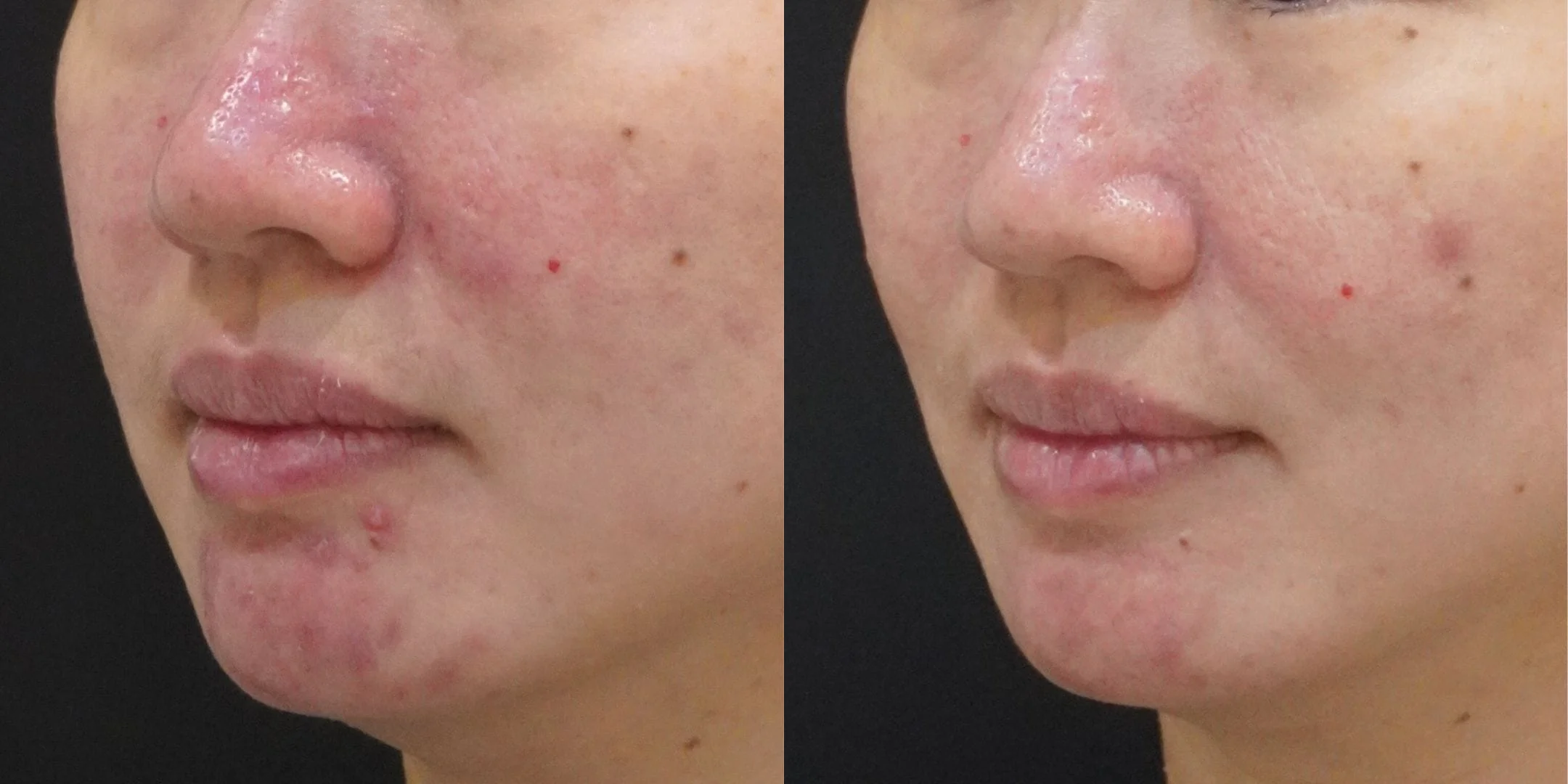
Rosacea before and after
This is a real patient treated at Verve Clinic. Results vary from person to person.
How should I care for skin with rosacea?
Rosacea treatment in clinic works best when your daily routine does not undo it. Rosacea skin has a weaker barrier, so the aim is to protect it, keep it hydrated and avoid anything that heats or irritates it. Fewer products are usually better than more, and it is worth introducing new products one at a time so you can tell what your skin tolerates.
A simple, gentle routine supports every treatment:
- cleanse with a mild, soap-free cleanser and lukewarm water
- use a fragrance-free moisturiser to support the skin barrier
- apply a broad-spectrum mineral sunscreen every day
- avoid scrubs, strong acids, alcohol-based toners and fragranced products
- patch test new products on a small area first
- never use unregistered whitening or “miracle” creams
Who is a good candidate for rosacea treatment?
You may benefit from treatment if you:
- flush easily or have redness that does not fade
- have bumps that have not improved with acne treatment
- have skin that stings or burns with skincare
- have used steroid creams on your face and now have red, sensitive skin
- want calmer, more even skin and fewer flare-ups
A note from Dr. Adriene Chee: “Many of my rosacea patients have tried everything: acne creams, home remedies, even creams from friends that turn out to contain steroids. By the time they see me, their skin is red, sensitive and frustrated. The good news is that once we understand what is going on, we can calm the skin and keep it calm. Seeing patients go out without heavy make-up again is one of the best parts of my work.”
Frequently asked questions
What is rosacea?
Rosacea (玫瑰痤疮) is a common, long-term skin condition that causes facial flushing, persistent redness and sometimes acne-like bumps, usually on the cheeks, nose, chin and forehead. It cannot be cured, but it can be controlled very well with the right treatment.
Is rosacea the same as acne?
No. Rosacea can cause bumps and pimples that look like acne, but it has no blackheads or whiteheads, it comes with flushing and redness, and it is treated differently. Some acne treatments can make rosacea worse, which is why a proper diagnosis matters.
What causes facial flushing?
In rosacea, the blood vessels in the face react too easily and the skin’s immune system is overactive. Triggers such as heat, sun, spicy food, hot drinks, alcohol, stress and exercise make the blood vessels widen, causing flushing (面部潮红).
Is rosacea contagious?
No. Rosacea cannot spread from person to person through touch, sharing towels or make-up.
Does diet affect rosacea?
Some foods and drinks, such as spicy food, hot drinks and alcohol, can trigger flushing, but there is no special diet that cures rosacea. Keeping a simple diary of what you eat and when you flush helps you find your own triggers.
Can rosacea be cured?
There is no permanent cure, but rosacea can be controlled very well. With the right treatment and by avoiding your triggers, most patients have much calmer, less red skin, and flares become less frequent and milder.
What are the best treatments for rosacea?
The best rosacea treatment depends on your symptoms. Lasers such as Fotona reduce persistent redness and visible blood vessels, prescription creams and tablets calm bumps and inflammation, toxin micro-injections reduce flushing, and collagen skin boosters strengthen sensitive skin. Most patients do best with a combination.
How many laser sessions will I need for rosacea?
It depends on how severe your redness is. Your doctor will plan the number of sessions at your consultation, and many patients need occasional maintenance sessions to keep the redness under control.
How long do toxin micro-injections for flushing last?
Results usually last 3 to 4 months, after which the treatment can be repeated.
Why are skin boosters used for rosacea?
Rosacea skin is often thin, sensitive and easily irritated. Collagen skin boosters support the skin’s natural repair, helping it become stronger, calmer and less reactive.
What is steroid-damaged skin (激素脸)?
It is redness, burning, bumps and thin, sensitive skin caused by using steroid creams on the face for a long time. The steroid may come from a prescribed cream used too long, or from unregistered whitening or acne creams that contain steroids without saying so.
How is steroid-damaged skin treated?
The first step is to stop the steroid, with your doctor’s guidance. Your skin may flare for a while after stopping, which is expected. We then calm the skin with prescription treatment, and repair it with skin boosters before moving on to other treatments if needed.
Should I stop my steroid cream straight away?
Talk to a doctor first. Stopping can cause a temporary flare, and your doctor can help you manage it and protect your skin while it recovers.
Can I wear make-up if I have rosacea?
Yes. Choose gentle, fragrance-free products, and a green-tinted primer can help neutralise redness. Remove make-up gently with a mild cleanser.
Which sunscreen is best for rosacea?
A broad-spectrum mineral sunscreen with zinc oxide or titanium dioxide is usually best tolerated, because it is gentle on sensitive skin. Use it every day, as sun is one of the most common rosacea triggers in Malaysia.
Is rosacea common in Asian skin?
Yes. Rosacea is often thought of as a fair-skinned condition, but it is common in Asian skin too, and it is often mistaken for acne, sensitive skin or an allergy.
When should I see a doctor about facial redness?
See a doctor if your face flushes easily, stays red, stings or burns with skincare, or breaks out in bumps that do not respond to acne treatment. The earlier rosacea is treated, the easier it is to control.
How much does rosacea treatment cost?
It depends on your treatment plan, so we give a personalised quote after your assessment. WhatsApp us for a quote.
Ready for calmer, less red skin?
At Verve Clinic in Petaling Jaya, a doctor will diagnose the cause of your redness and plan a rosacea treatment that suits your skin. WhatsApp us to arrange your assessment.
About the author
Dr. Adriene Chee is the Medical Director of Verve Clinic in Petaling Jaya. She has more than 10 years of experience. Her qualifications include an MD from the National University of Malaysia (UKM), a Postgraduate Diploma in Dermatology (Bangkok) and an LCP in Aesthetic Medicine. Meet our team.
This article is general information, not medical advice. Results vary from person to person. Please discuss the benefits and risks of any treatment with a qualified doctor.