Written by Dr. Adriene Chee, Medical Director, Verve Clinic. Last updated 28 September 2026.
You wear sunscreen, you have a serum you trust, and your skin still does not look the way it used to. Foundation catches on rough patches. Pores look larger than they did five years ago. Fine lines stay put after you stop smiling, and old acne marks show up the moment the light hits your face from the side. These are some of the most common concerns we hear at Verve Clinic in Petaling Jaya, and none of them is really about volume. They are about the quality of the skin itself, which is exactly what the Juvelook skin booster is designed to improve.
In short: Juvelook is a Korean collagen skin booster that combines PDLLA (poly-D,L-lactic acid), a collagen stimulator, with non-crosslinked hyaluronic acid for hydration. It is used to improve skin texture, pores, fine lines and shallow acne scars. At Verve Clinic it is given as a course of 3 sessions, 1 month apart, and results typically last 6 to 9 months. It does not add facial volume or lift sagging skin.
Skincare works on the surface. Juvelook works in the dermis, the layer where collagen is made and lost. Below is what it is, what it can and cannot do, how it compares with the other injectables you may have heard of, and what a course of treatment involves.
What is Juvelook?
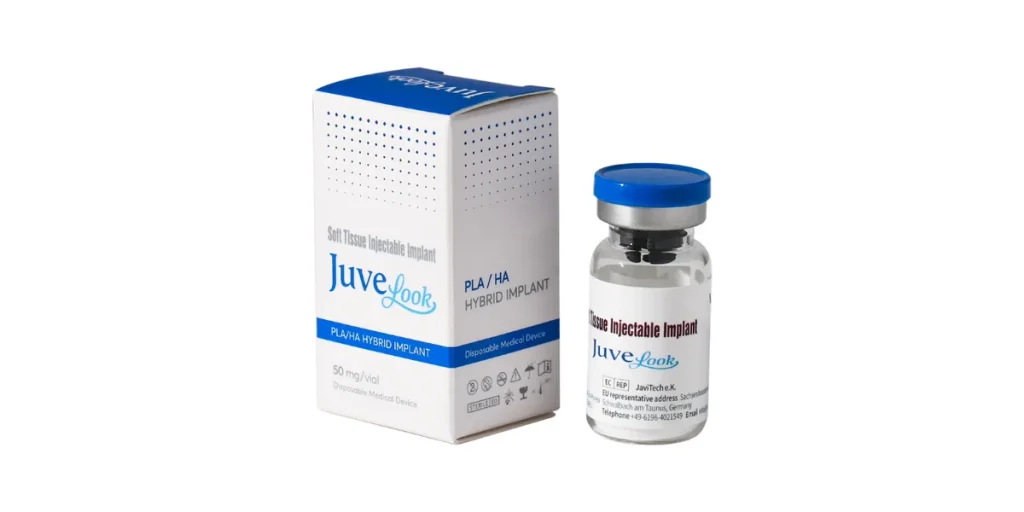
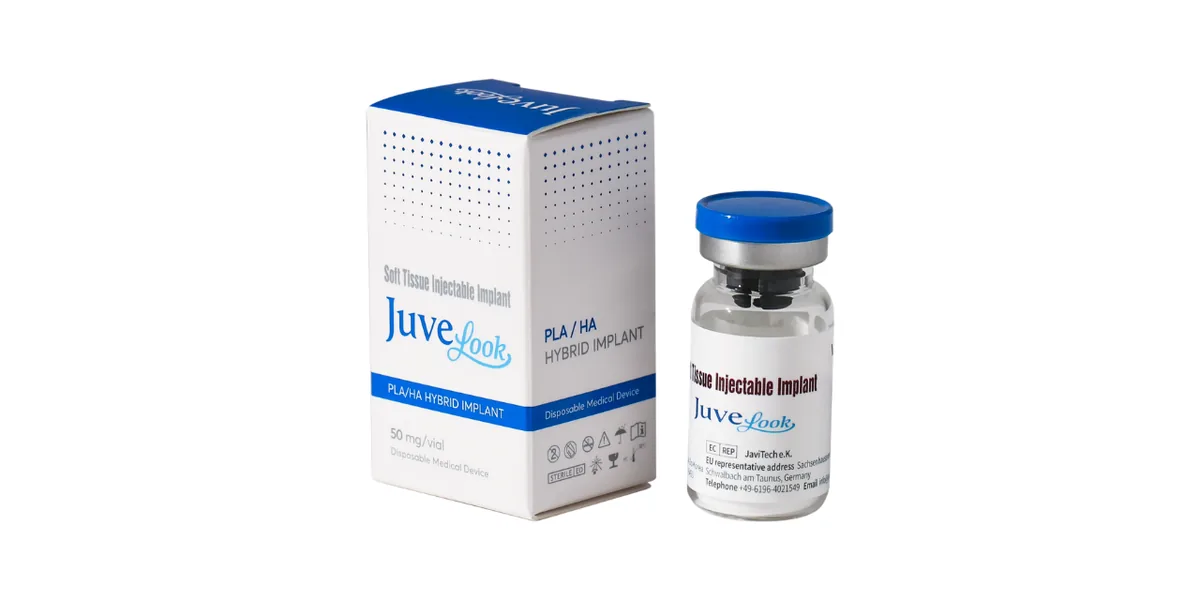
Juvelook is an injectable skin booster made by VAIM Global in South Korea. Each vial contains 42.5 mg of PDLLA and 7.5 mg of non-crosslinked hyaluronic acid (HA), supplied as a powder that is mixed with sterile fluid just before treatment.
The two ingredients do different jobs. The hyaluronic acid draws water into the skin, so hydration improves quickly. The PDLLA is made of tiny microspheres that prompt your fibroblasts, the cells that build collagen, to produce more of it over the following weeks. The microspheres are then gradually broken down by the body, much as dissolvable stitches are, leaving behind collagen that is your own.
When patients ask us what Juvelook is, the simplest answer is the most accurate one: it is a collagen skin booster. Its purpose is better skin, not a different face.
The most common misconception about Juvelook
Because Juvelook contains PDLLA, the same material used in volumising collagen stimulators such as AestheFill, many people assume it will fill hollow cheeks or lift sagging skin. It will not.
The difference is dose and depth. A Juvelook vial contains 42.5 mg of PDLLA and is placed in the dermis to improve the skin itself. A volumising product such as AestheFill carries more than three times as much PDLLA per vial and is placed deeper, where new collagen adds structure. If your main concern is volume loss or sagging, Juvelook alone will disappoint you, and we would rather tell you that at your consultation than after your third session.
Why does skin quality decline?
From our late twenties, the skin makes less collagen than it loses each year. The dermis thins, its collagen network becomes looser and less organised, and it holds less water. The result shows up gradually: a rougher texture, pores that look larger because the skin around them has less support, fine lines that linger, and a dullness that makeup covers but does not fix.
In Malaysia, year-round sun speeds this up. Ultraviolet light breaks down collagen faster than the skin can replace it, which is why sun damage often appears as texture and pigmentation well before deep wrinkles.
Acne scars form through a related process. When a deep, inflamed spot heals, the collagen in that area is damaged and not fully rebuilt, leaving a depression in the skin. Because both problems come down to missing or disorganised collagen, a treatment that rebuilds collagen from within addresses the cause rather than the surface.
Is Juvelook good for acne scars?
For the right type of scar, yes. Juvelook works best on shallow, rolling acne scars and on the general unevenness that acne often leaves behind. By stimulating new collagen beneath these areas, it gradually softens their edges so they catch less light. Published studies on PDLLA for atrophic acne scars are encouraging, although most are still small.
It has limits. Deep ice pick scars and sharp-edged boxcar scars are tethered or too narrow for a skin booster to lift on its own. These usually need scar-specific treatment first, such as subcision, TCA CROSS or laser resurfacing, with Juvelook added afterwards to improve the surrounding skin. We will tell you honestly which of your scars Juvelook can help and which need something else.
Juvelook vs Profhilo vs Plinest: which skin booster?
The short answer: all three improve skin quality, but through different ingredients. Juvelook is the collagen stimulator of the group, Profhilo focuses on deep hydration and firmness, and Plinest supports repair in thin or damaged skin. Here is how they compare.
| Juvelook | Profhilo | Plinest | |
|---|---|---|---|
| Core ingredient | PDLLA with non-crosslinked hyaluronic acid | High concentration of high- and low-weight hyaluronic acid | Polynucleotides (highly purified DNA fragments) |
| How it works | Hydrates immediately, then stimulates new collagen over the following weeks | Spreads through the skin, hydrating it and encouraging collagen and elastin | Supports the skin’s own repair processes and fibroblast activity |
| Best suited to | Rough texture, pores, fine lines, shallow acne scars | Dehydrated, dull or crepey skin and early laxity | Thin, fragile or damaged skin and fine lines |
| Typical course | 3 sessions, 1 month apart | 2 sessions, 4 weeks apart | 3 sessions, 4 weeks apart |
| How long results last | 6 to 9 months | Around 6 months | Around 6 to 9 months |
These treatments are not rivals. Many patients have more than one concern, and the right plan sometimes combines them. If you have read our earlier comparison of skin boosters, Juvelook adds a collagen-stimulating option to that list.
Juvelook vs AestheFill vs Sculptra: why the confusion?
The short answer: all three stimulate collagen, which is why they are often mentioned together. The difference is purpose. AestheFill and Sculptra are volumisers, placed deeper to restore lost structure. Juvelook is a skin booster, placed in the dermis to improve the skin itself.
| Juvelook | AestheFill | Sculptra | |
|---|---|---|---|
| Material | PDLLA with hyaluronic acid | PDLLA | PLLA (poly-L-lactic acid) |
| Made by | VAIM Global, Korea | Regen Biotech, Korea | Galderma |
| Main purpose | Skin quality: texture, pores, fine lines, shallow scars | Restoring volume and softening deeper folds | Restoring volume lost with ageing |
| Areas treated | Face, neck, décolletage, acne scars and stretch marks | Whole face and body | Targeted areas of the face only |
| Where it is placed | The dermis | Deep dermis or below the skin | Deep dermis or below the skin |
| Adds volume? | No | Yes, gradually | Yes, gradually |
| How long results last | 6 to 9 months | Up to around 2 years | Up to around 2 years |
If you want both better skin and restored volume, the two approaches can be planned together. The consultation is where we work out which one your face needs first.
What is the Juvelook treatment like?
Juvelook fits into a normal schedule. Numbing cream is applied before treatment, and the product is delivered either by manual injection or with an injector gun, depending on the area and your concern. Juvelook is not limited to the face: the same collagen-building effect is used to soften stretch marks, wherever on the body they appear. Most people return to their day straight afterwards.
| Areas treated | Face, neck, décolletage, acne scars, and stretch marks on any part of the body |
| Delivery | Manual injection or injector gun |
| Comfort | Numbing cream is applied beforehand |
| Downtime | Minimal; mild redness and small injection marks that usually settle within a day or two, with bruising possible. We have not seen lumps or bumps in our patients. |
| Course | 3 sessions, 1 month apart |
| Results | First changes after 1 to 2 weeks, with longer-lasting improvement from about a month |
| Longevity | 6 to 9 months, with maintenance every 6 months |
The early improvement comes mostly from hydration. The longer-lasting change arrives as new collagen forms, and it builds across the course, which is why we recommend completing all three sessions before judging the result. The aim is skin that looks smoother and healthier up close, not skin that looks treated.
Is Juvelook right for you?
It tends to suit people who are bothered by any of the following:
- Rough or uneven skin texture, or skin that looks dull and tired
- Enlarged pores
- Fine lines and crepey skin on the face or neck
- Shallow, rolling acne scars
- Stretch marks on any part of the body
- A preference for gradual, natural results rather than a change in face shape
It is not the right choice if your main concern is volume loss or sagging. As with any injectable, suitability also depends on your skin, your medical history and whether you are pregnant or breastfeeding. A proper assessment by a qualified doctor is the only way to know whether Juvelook is right for you and to plan it safely.
Juvelook: frequently asked questions
What is Juvelook?
Juvelook is a collagen skin booster from VAIM Global in South Korea. It combines PDLLA, which stimulates your skin to produce new collagen, with non-crosslinked hyaluronic acid for hydration. It is used to improve skin texture, pores, fine lines and shallow acne scars.
How many Juvelook sessions will I need?
At Verve Clinic we recommend a course of 3 sessions, 1 month apart. Collagen builds with each session, so the full course gives a better and longer-lasting result than a single treatment.
When will I see results, and how long do they last?
Most patients notice a difference after 1 to 2 weeks, with a longer-lasting improvement visible from about a month as new collagen forms. Results typically last 6 to 9 months, and we suggest a maintenance session every 6 months to keep them.
Does Juvelook add volume or lift the face?
No. This is the most common misconception about it. Juvelook improves skin quality, meaning texture, pores, fine lines and firmness of the skin. It does not restore lost volume or lift sagging skin. For those concerns, a volumising collagen stimulator or another treatment is more suitable.
Can Juvelook treat acne scars?
It works well on shallow, rolling acne scars and general unevenness. Deep ice pick and boxcar scars usually need scar-specific treatment such as subcision, TCA CROSS or laser first, with Juvelook used to improve the surrounding skin.
Does Juvelook hurt, and is there downtime?
Numbing cream is applied before treatment, so most patients find it very manageable. Afterwards you may have mild redness and small injection marks that usually settle within a day or two. Bruising is possible, but most people go back to their normal routine the same day.
How much does Juvelook cost in Malaysia?
The number of vials and the areas treated vary from person to person, so pricing is tailored to your plan. WhatsApp us and we will walk you through the options and arrange a consultation for an accurate quote.
Ready for better skin, not a different face?
Rough texture, visible pores and old acne scars are common, but they are not something you have to live with. Juvelook rebuilds collagen where the skin has lost it, with results that look like your own skin on a very good day.
Curious whether Juvelook is right for your skin? WhatsApp us to find out more and arrange a consultation.
About the author
Dr. Adriene Chee is the Medical Director of Verve Clinic in Petaling Jaya and an LCP-certified aesthetic physician with over 10 years of experience. Her qualifications include an MD from the National University of Malaysia (UKM), a Postgraduate Diploma in Dermatology (Bangkok) and an LCP in Aesthetic Medicine, with affiliations to the American Association of Aesthetic Medicine (AAAM, USA), the American Academy of Aesthetic Medicine and the Society for Anti-Aging, Aesthetic & Regenerative Medicine Malaysia (SAAARMM). Meet our team.
This article is for general information only and does not constitute medical advice. Individual results, downtime and suitability vary. Any aesthetic procedure carries risks that should be discussed with a qualified medical practitioner before treatment. Please arrange a consultation for personalised advice.