Pregnancy marks (妊娠纹), growth marks (生长纹) or weight marks (肥胖纹)? Why stretch marks appear, why creams rarely help, and which treatments make red and white marks fade
Medically reviewed by Dr. Adriene Chee, Medical Director, Verve Clinic. Last updated: October 2026.
You notice them when you change, at the pool, or in a photo you did not expect. Lines across the tummy after pregnancy. Marks on the hips or thighs after losing weight. Silvery streaks on the shoulders after months at the gym. You have tried the creams and the oils, and they are still there.
Stretch marks are extremely common, and they are not a sign that you did anything wrong. They are also not something you simply have to live with. In this guide, Dr. Adriene Chee, who has been practising since 2015, explains what stretch marks are, what actually works, and how stretch marks treatment is planned for red and white marks.
What are stretch marks?
In short: Stretch marks are a type of scar that forms when the skin stretches or shrinks quickly and its collagen tears. They cannot be erased completely, but treatment can make them much less noticeable. New red marks respond fastest; old white marks need treatments that rebuild collagen. Most patients need 3 to 6 sessions, 4 weeks apart.
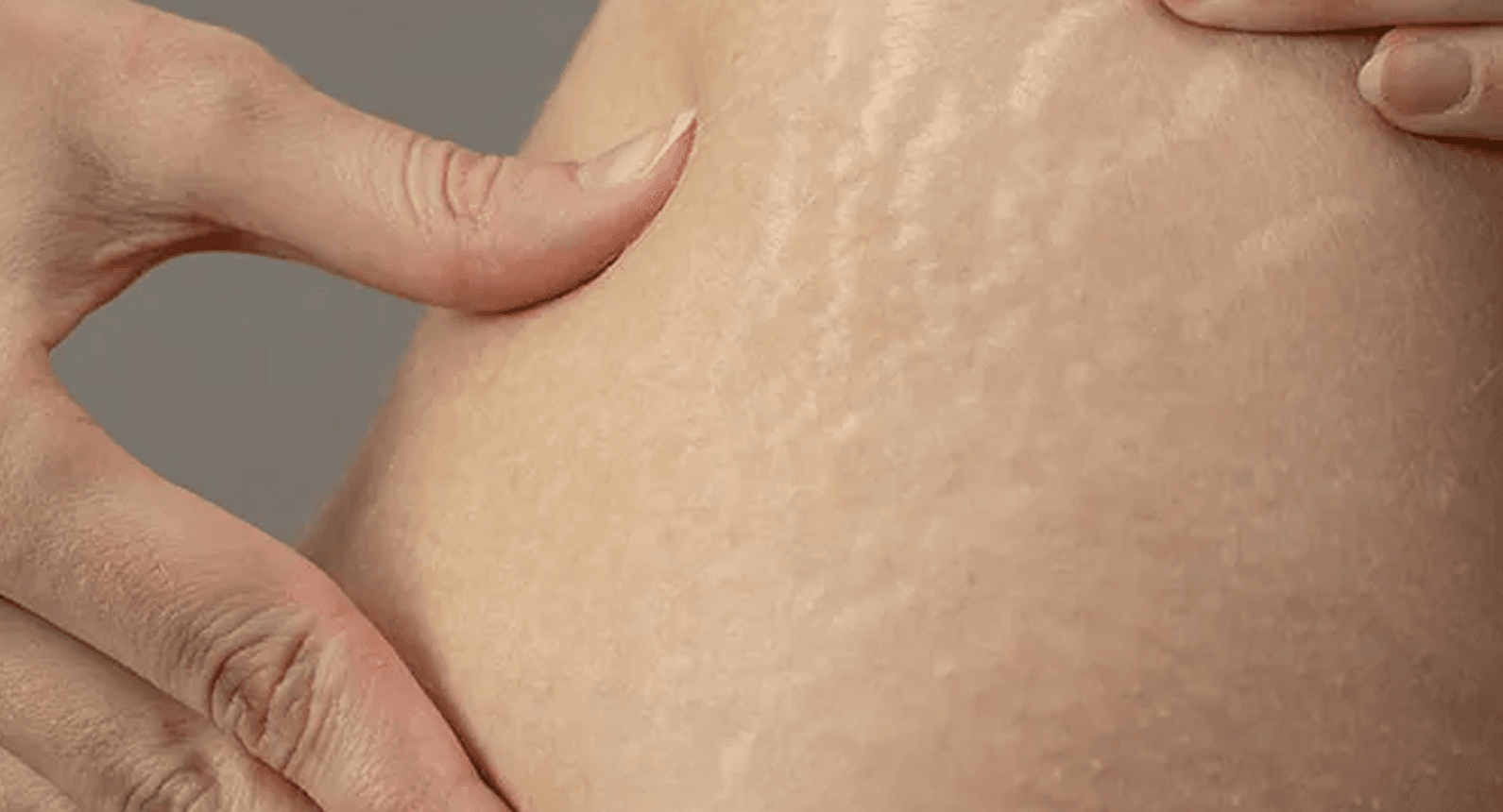
Stretch marks are known medically as striae distensae, and in Malay as parut regangan. Deep in the skin, collagen and elastic fibres act like a supportive net. When the skin is stretched faster than this net can adapt, the fibres tear and the skin above becomes thin. According to the American Academy of Dermatology, a stretch mark is a type of scar, which is why it does not simply disappear on its own.
They are very common. Studies estimate that 50 to 80% of people have stretch marks, and around 90% of pregnant women develop them by the third trimester.
Why do stretch marks appear?
Anything that stretches or shrinks the skin quickly can cause stretch marks. Hormones and genes also play a part, which is why some people get them easily and others do not.
| Cause | Where they usually appear | Chinese name |
|---|---|---|
| Pregnancy | Tummy, breasts, hips, thighs | 妊娠纹 |
| Weight gain or weight loss | Tummy, hips, thighs, arms, back | 肥胖纹 |
| Muscle growth from training | Shoulders, upper arms, chest | – |
| Teenage growth spurts | Thighs, hips, lower back, knees | 生长纹 |
| Long-term steroid use or some medical conditions | Can appear anywhere | – |
If stretch marks appear suddenly with no clear reason, or alongside other symptoms, see a doctor, as they can occasionally be a sign of a hormonal condition.
Red vs white stretch marks: why the colour matters
The colour of your stretch marks tells your doctor how old they are, and which treatment will work best.
| Red, pink or purple marks | White or silvery marks | |
|---|---|---|
| Stage | New (striae rubra) | Old (striae alba) |
| What is happening | Skin is inflamed and blood vessels are still active | The mark has settled into a thin, flat scar |
| Feel | May be raised or itchy | Often slightly sunken, with a crinkled surface |
| Response to treatment | Faster: fewer sessions needed | Slower: needs collagen rebuilding over more sessions |
The takeaway: the earlier you treat stretch marks, the better they respond. But white marks can still improve noticeably with the right combination.
Do stretch mark creams and oils work?
For most people, not much. A 2022 Cochrane review of 6 trials involving 800 women found no high-quality evidence that any cream or oil, including cocoa butter and olive oil, prevents stretch marks in pregnancy. The American Academy of Dermatology notes that creams work best, if at all, on early marks and have little effect on mature stretch marks.
That does not mean moisturising is pointless: it keeps the skin comfortable and less itchy. But to change how a stretch mark looks, the treatment has to reach the deeper layer where the collagen has torn. That is what in-clinic treatments are designed to do.
What is the best treatment for stretch marks?
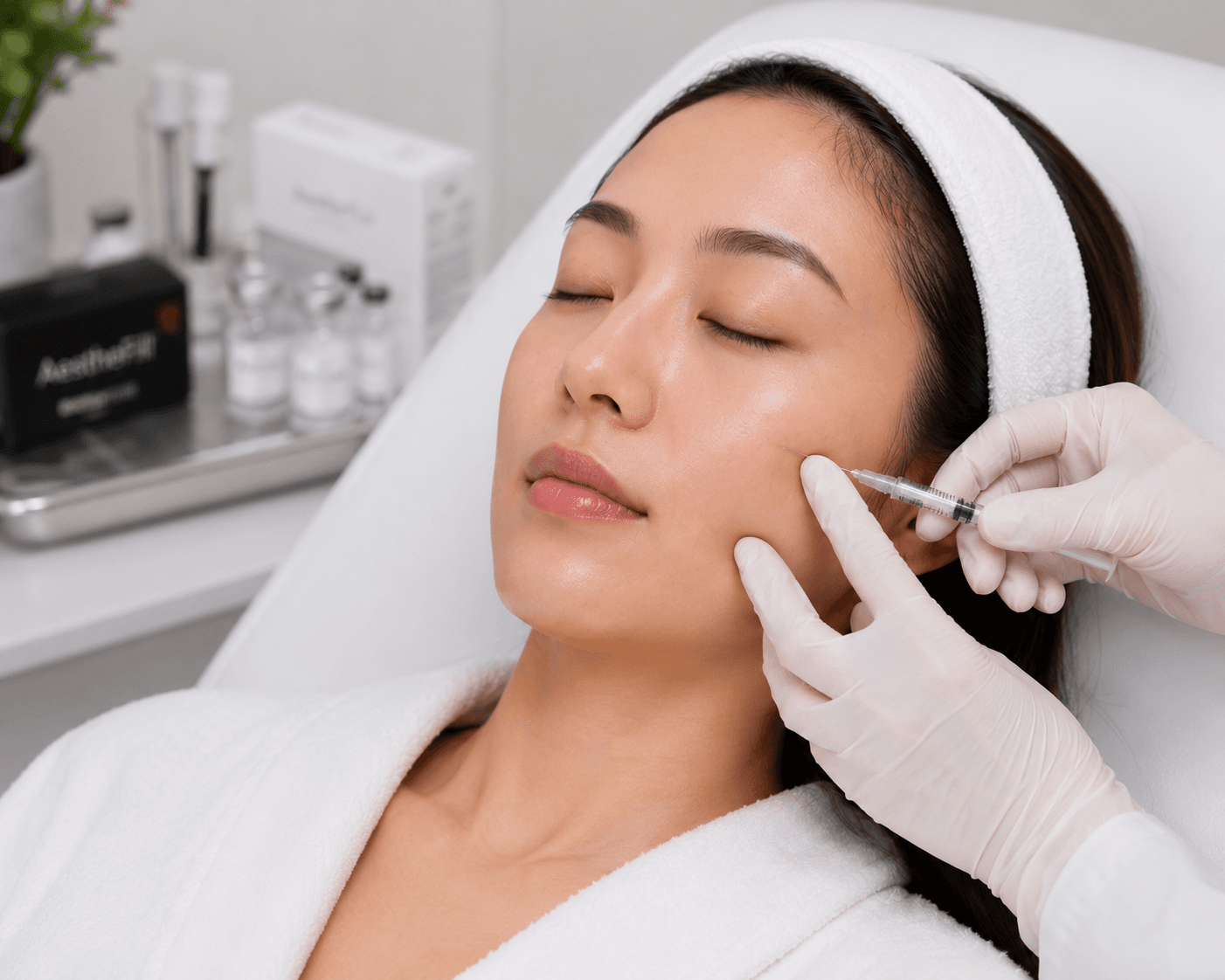
There is no single best treatment for every stretch mark. The most effective approach is usually a combination: a treatment that remodels the skin, such as Matrix RF microneedling or a laser, with an injectable that rebuilds collagen, such as AestheFill or a skin booster. Your doctor chooses based on the colour, depth and size of your marks.
Every in-clinic treatment for stretch marks works on the same idea: prompt the skin to rebuild the collagen that was torn, so the mark becomes thicker, flatter and closer to your normal skin colour. Here is how each option works:
| Treatment | How it works |
|---|---|
| Matrix RF microneedling | Fine needles deliver radiofrequency heat into the deeper skin to remodel collagen |
| Fotona laser | Laser energy stimulates collagen and reduces redness |
| PicoWay laser | Ultra-short picosecond pulses trigger collagen renewal with little downtime |
| Fractional CO2 laser | Resurfaces the skin in tiny columns to rebuild collagen in deeper, older marks |
| AestheFill | Injectable collagen stimulator that thickens thin skin under the mark |
| Karisma collagen booster | Injectable collagen and hyaluronic acid that rebuild and hydrate the skin |
| Skin boosters | Injectable boosters that improve skin hydration, texture and elasticity |
| PRF (platelet-rich fibrin) | Growth factors from your own blood support healing and collagen |
| PB Serum | Enzyme injections, including collagenase, break down old, disorganised collagen so new collagen can form |
How many sessions do stretch marks need?
Most patients need 3 to 6 sessions, spaced 4 weeks apart. Newer, red marks usually need fewer sessions, while older, white or wider marks need more. Your doctor builds the plan around the colour, depth and size of your marks, combining treatments where it helps.
| Quick facts | |
|---|---|
| Sessions | Usually 3 to 6 sessions, 4 weeks apart |
| Comfort | Numbing cream before treatment; most patients feel warmth or prickling |
| Downtime | Usually 1 to 3 days of pinkness or mild swelling; fractional CO2 laser has more downtime |
| When you see a change | Often after 2 sessions, improving for 3 to 6 months after the last session |
| Result | Marks fade and flatten noticeably, but do not disappear completely |
Before and after: real results
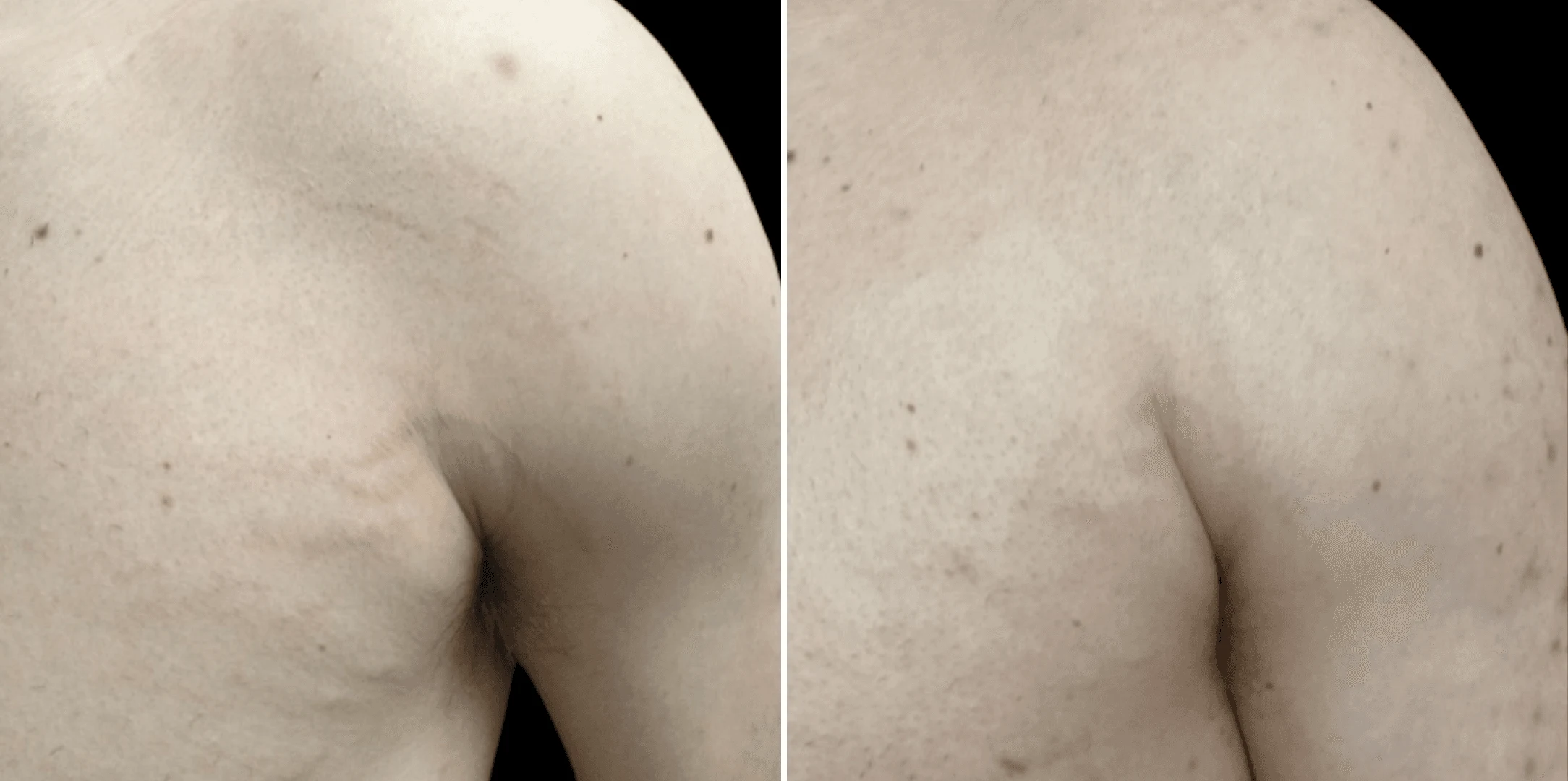
These are real patients treated at Verve Clinic. Results depend on the colour, age and depth of the marks.
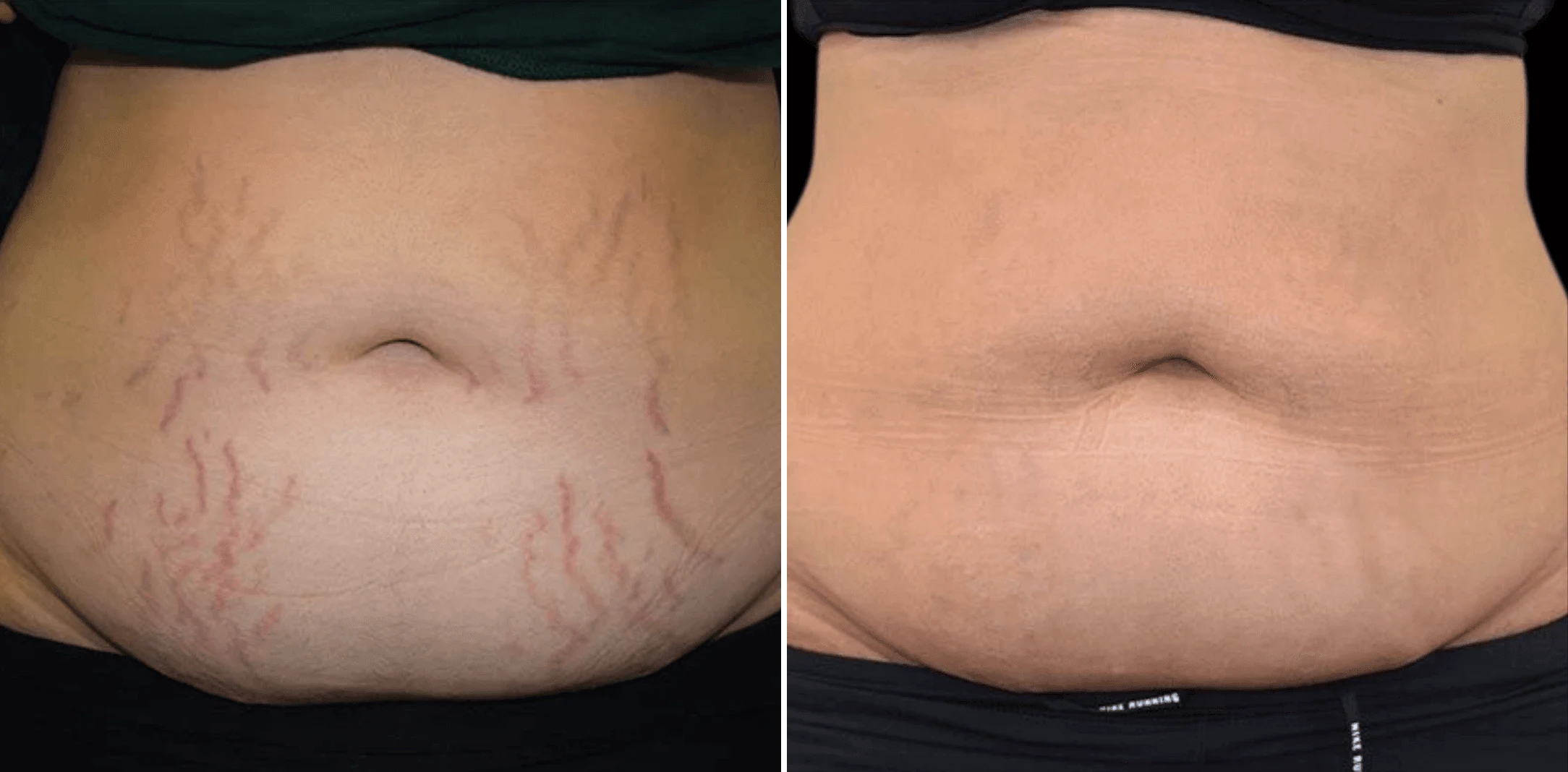
Stretch marks after pregnancy
Pregnancy is the most common reason women come to us about stretch marks. The marks often look their worst in the first months after birth, when they are still red and the skin is loose.
At Verve Clinic, we start stretch mark treatment once you have finished breastfeeding. This keeps you and your baby safe, and gives your body time to recover. The good news is that marks are often still pink at this stage, so they tend to respond well. If your tummy skin is also loose, your doctor may suggest combining stretch mark treatment with skin tightening.
Stretch marks after weight loss, and for men who train
Losing a lot of weight is an achievement, but it can leave stretch marks on the tummy, hips, thighs and arms. Treatment works best once your weight has been stable for a while, so new marks are less likely to form.
Men get stretch marks too. Rapid muscle growth from weight training commonly causes marks on the shoulders, upper arms and chest. They respond to the same treatments, and many of our male patients choose Matrix RF microneedling or laser so they can return to training quickly.
Does stretch mark treatment really work?
Yes, but realistically. No treatment can erase stretch marks, but studies show that treatments which remodel collagen, such as radiofrequency microneedling and fractional lasers, can make them noticeably flatter, smaller and less visible, especially when treatments are combined.
In a 2023 study in the Journal of Cosmetic Dermatology, 4 sessions of fractional radiofrequency, spaced 4 weeks apart, reduced the volume of stretch marks by 19.1% on 3D imaging at 16 weeks, with redness reduced by 14.3%. Patients rated the treatment as tolerable and were satisfied with the result.
A 2016 study in Dermatology Research and Practice compared microneedle radiofrequency alone with microneedle radiofrequency combined with fractional CO2 laser for white stretch marks. The combination reduced the size of the marks significantly more than radiofrequency alone, with no lasting side effects. This supports the combination approach we use.
A review in the British Journal of Medical Practitioners also found that microneedling produced marked to excellent improvement in 43.8% of patients after 3 sessions, 4 weeks apart.
Is stretch mark treatment safe?
Yes. When performed by a doctor, stretch mark treatments are low-risk, and side effects are usually mild and settle within a few days. Treatment is suitable for all skin types, including darker skin, with settings adjusted to lower the risk of temporary darkening. What you may notice:
- pinkness, mild swelling or a warm, sunburn-like feeling for 1 to 3 days
- small bruises after injectable treatments
- temporary darkening of the skin in some people, which is why your doctor adjusts settings for your skin type
Treatment is not suitable during pregnancy or breastfeeding, over an active skin infection, or for some people who form raised scars easily. Your doctor will check this at your consultation.
Is stretch mark treatment right for you?
You may be a good candidate if you:
- have red, pink or white stretch marks that bother you
- have finished pregnancy and breastfeeding, or your weight has been stable for a while
- want marks that are flatter and less noticeable, rather than a promise of complete removal
- are ready for a course of sessions, usually 3 to 6
A note from Dr. Adriene Chee: “Many patients tell me they have spent years hiding their stretch marks. I am honest with them: we cannot erase stretch marks, but we can help them fade enough that patients stop thinking about them, and feel confident wearing the clothes they love again, even when their skin shows. The key is matching the treatment to the mark, and starting while the marks are still red if you can.”
Frequently asked questions
Can stretch marks be removed completely?
No treatment can erase stretch marks completely, because they are a type of scar. Treatment can make them much less noticeable: flatter, smoother and closer to your natural skin colour. Most patients are happy when their marks fade enough that they stop noticing them.
Do stretch marks go away on their own?
They fade over time, usually from red or purple to white or silvery, but they rarely disappear completely. The American Academy of Dermatology describes stretch marks as a type of scar, which is why treatment is needed to make them noticeably less visible.
What is the best treatment for stretch marks?
It depends on the colour, depth and size of your marks. Most patients get the best result from a combination: Matrix RF microneedling or a laser such as PicoWay, Fotona or fractional CO2 to remodel the skin, together with an injectable such as AestheFill, skin boosters, Karisma, PRF or PB Serum to rebuild collagen.
Laser or microneedling: which is better for stretch marks?
Often both. Matrix RF microneedling remodels collagen deep in the skin, while lasers such as PicoWay, Fotona and fractional CO2 resurface the skin and stimulate collagen. A 2016 study found that combining microneedle radiofrequency with fractional CO2 laser worked better than radiofrequency alone. Your doctor will choose the right combination for your marks.
How many sessions will I need?
Most patients need 3 to 6 sessions, 4 weeks apart. Older, deeper or wider marks usually need more sessions than new ones.
When will I see results?
Many patients notice softer, less red marks after the first 2 sessions. Because collagen keeps rebuilding for months, the result continues to improve for 3 to 6 months after your last session.
How long do the results last?
The improvement is long-lasting, because it comes from new collagen in your skin. However, new stretch marks can still form with a future pregnancy, weight changes or rapid muscle growth.
Do stretch mark creams work?
Creams and oils have not been shown to prevent stretch marks. A 2022 Cochrane review of 6 trials found no high-quality evidence that any cream, including cocoa butter and olive oil, prevents them in pregnancy. Creams may help new marks a little, but have little effect on old white marks.
Can stretch marks be prevented?
There is no reliable way to prevent them. A 2022 Cochrane review found no high-quality evidence that any cream or oil prevents stretch marks in pregnancy. Avoiding rapid weight changes may lower the risk, but genes and hormones also play a large part.
Are red stretch marks easier to treat than white ones?
Yes. Red or purple marks are new and still have an active blood supply, so they respond faster. White marks are older and more like a settled scar, so they need more sessions to rebuild collagen. That is why it helps to treat marks early.
Can I treat stretch marks after giving birth?
Yes, but at Verve Clinic we start treatment once you have finished breastfeeding. This keeps you and your baby safe, and gives your skin time to settle after pregnancy.
Can I have stretch mark treatment while pregnant?
No. We wait until after you have given birth and finished breastfeeding before starting stretch mark treatment.
Can men get stretch marks treated?
Yes. Many of our male patients develop stretch marks on the shoulders, arms or chest from rapid muscle growth at the gym. The same treatments work for men and women.
Is stretch mark treatment suitable for darker skin?
Yes. Treatment is suitable for all skin types. For darker skin, your doctor adjusts the settings and plan to lower the risk of temporary darkening, known as post-inflammatory hyperpigmentation.
Is stretch mark treatment painful?
We apply numbing cream before treatment. Most patients describe a warm, prickling feeling rather than pain.
Is there downtime?
It depends on the treatment. Most leave the skin pink or slightly swollen for 1 to 3 days. Fractional CO2 laser has the most downtime. Your doctor will plan treatment around your schedule.
What is the difference between 妊娠纹, 生长纹 and 肥胖纹?
They are all stretch marks, named by their cause: 妊娠纹 are pregnancy stretch marks, 生长纹 are growth stretch marks from teenage growth spurts, and 肥胖纹 are stretch marks from weight gain. They are treated the same way, based on their colour and depth.
How much does stretch mark treatment cost?
It depends on the size of the area, the treatments chosen and the number of sessions, so we give a personalised quote after your assessment. WhatsApp us for a quote.
Ready to feel comfortable in your skin? Start with an assessment
Stretch marks are common, but you do not have to keep hiding them. At Verve Clinic in Petaling Jaya, a doctor will assess the colour, depth and size of your marks and build a treatment plan around them. WhatsApp us to arrange your assessment.
About the author
Dr. Adriene Chee is the Medical Director of Verve Clinic in Petaling Jaya. She has been practising since 2015. Her qualifications include an MD from the National University of Malaysia (UKM), a Postgraduate Diploma in Dermatology (Bangkok) and an LCP in Aesthetic Medicine. Meet our team.
This article is general information, not medical advice. Results vary from person to person. Please discuss the benefits and risks of any treatment with a qualified doctor.